Poland is a wonderful destination for anyone who loves rich history, tasty food, stunning nature, and lively cities. Whether you want to explore medieval castles, hike in the mountains, or learn about the past, this guide covers the best things to do in Poland while helping you plan your trip step by step.
Planning a trip to Poland means choosing from a wide mix of sights. From the royal charm of Krakow and the modern energy of Warsaw to the sandy beaches of the Baltic coast and the hiking trails of the Tatra Mountains, there is something here for every traveler.
Best Things to Do in Poland
If you are planning your travels, here are the top activities you should consider.
| Experience | Best Place | Time Needed | Best for | Book Ahead? |
|---|---|---|---|---|
| Historic city break | Krakow | 3–4 days | History, food, and culture | No |
| World War II history | Warsaw and Krakow | 2–3 days | History enthusiasts | Yes |
| Mountain hiking | Zakopane | 2–3 days | Nature lovers and active travelers | Yes (in summer) |
| Medieval castle | Malbork | Half day | History and architecture fans | Recommended |
| Salt mine exploration | Wieliczka | Half day | Families and curious travelers | Essential |
| Wildlife watching | Bialowieza | 1–2 days | Nature and animal fans | Yes |
| Baltic coast getaway | Gdansk and Sopot | 2–3 days | Beach and sea lovers | No |
| Lake water sports | Masurian Lakes | 2–4 days | Sailors and kayakers | Recommended |
| Family theme parks | Energylandia | 1 day | Families with kids | Recommended |
Best Polish Cities for a First Trip
Choosing where to go first can feel tricky because each city offers a totally different vibe.
| Destination | Best For | Suggested Stay | Best Experience |
|---|---|---|---|
| Krakow | History, food, day trips | 3–4 days | Old Town, Wawel, Wieliczka |
| Warsaw | Museums, modern history, nightlife | 2–3 days | Old Town, POLIN, Uprising Museum |
| Gdansk | Baltic culture and architecture | 2–3 days | Long Market, Solidarity, waterfront |
| Wroclaw | Families, architecture, dwarf walks | 2 days | Market Square and dwarf hunt |
| Zakopane | Mountains and winter sports | 2–3 days | Tatra trails and regional culture |
| Torun | Medieval history and food culture | 1–2 days | Old Town and gingerbread |
Krakow: Poland’s Strongest First Base
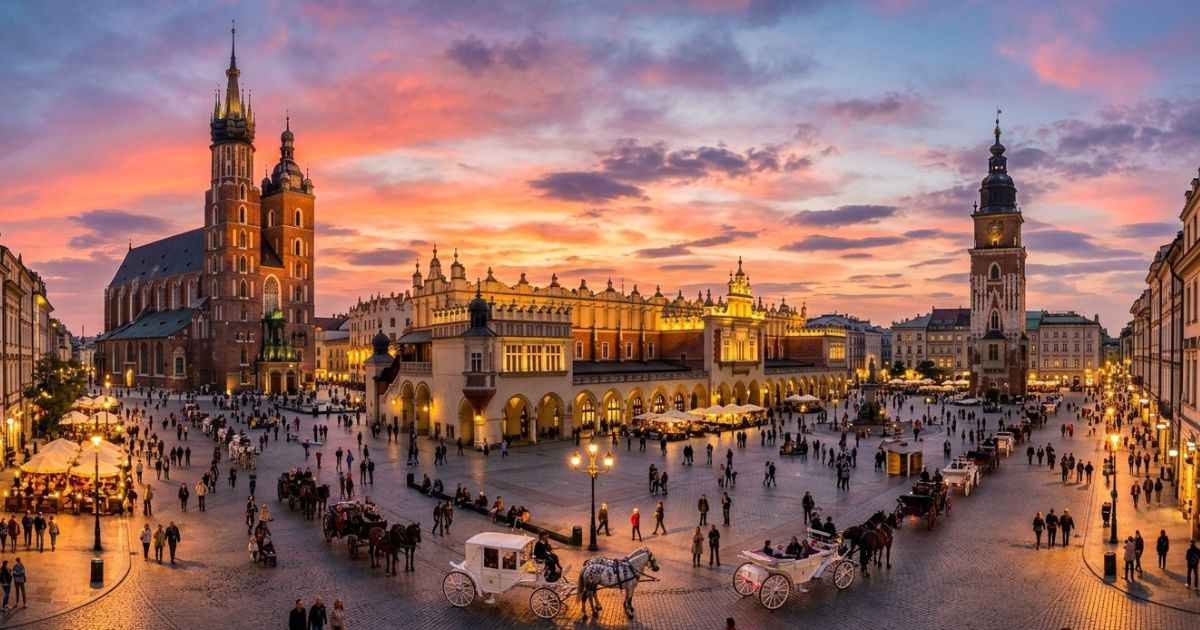
Krakow is one of the most convenient first bases for visitors interested in historic sights, food, and day trips. Much of Krakow’s historic center survived World War II with its major architectural fabric intact, although the city and its communities were profoundly affected by the war.
- Rynek Glowny: Rynek Główny is a vast medieval market square and one of Krakow’s defining landmarks.
- St. Mary’s Basilica: A gorgeous Gothic church featuring a famous wooden altarpiece; a trumpeter plays the hourly heynal from the taller tower; the melody traditionally stops abruptly.
- Cloth Hall: Cloth Hall contains souvenir and handicraft stalls, including traditional Polish items and jewelry.
- Wawel Hill and Wawel Royal Castle: A hilltop castle complex that served as the home of Polish kings for centuries.
- Kazimierz: Kazimierz is Krakow’s historic Jewish district and former medieval town, known for synagogues, cemeteries, cafes, restaurants, and cultural venues.
- Schindler’s Factory: A moving museum dedicated to Oskar Schindler and the wartime history of Krakow.
- Rynek Underground: A modern underground museum beneath the main square that shows medieval market stalls and ruins.
Krakow Quick Guide
| Field | Detail |
|---|---|
| Best for | History, food, walking tours, and day trips |
| Recommended time | 3 to 4 days |
| Location fit | Excellent main base |
| Booking need | Advance tickets are strongly recommended for Schindler’s Factory and Rynek Underground during busy periods; verify availability through the official museum websites. |
| Difficulty | Most central sights are walkable, but expect cobblestones, uneven surfaces, and occasional stairs. |
| Best season | Spring and autumn for lower crowds |
Warsaw: Reconstructed History and Modern Culture
Warsaw is a city of sharp contrasts where gleaming glass skyscrapers stand near carefully rebuilt historic districts. People often think Warsaw is just an old town, but it is actually a dynamic capital driving modern art, science, and business.
- Warsaw Old Town: Meticulously rebuilt after World War II, featuring colorful townhouses and the Royal Castle.
- Warsaw Uprising Museum: A powerful, interactive museum that tells the story of the 1944 resistance movement.
- POLIN Museum: A major museum dedicated to Polish Jewish history.
- Lazienki Park: A vast green space featuring a palace on an island, seasonal open-air Chopin concerts are held in Lazienki Park; check the current concert schedule before visiting, and roaming peacocks.
- Palace of Culture and Science: The Palace of Culture and Science has a well-known observation terrace, subject to current opening hours and ticket rules.
- Vistula Boulevards: A popular waterfront area for walking, cycling, and enjoying outdoor cafes in warm weather.
- Wilanov Palace: Wilanów Palace is a major Baroque royal residence surrounded by formal gardens.
Gdansk, Sopot, and the Baltic Coast
Gdansk offers a completely different architectural style influenced by its maritime trading history along the Baltic Sea. Gdańsk, Sopot, and Gdynia together form Poland’s Tricity metropolitan area.
- Long Market: A grand pedestrian street lined with historic merchant houses, statues, and the famous Neptune Fountain.
- Motlawa Waterfront: A scenic riverfront area featuring the historic Zuraw, or Crane, is a landmark medieval port crane and city gate on the Motlawa waterfront and plenty of seafood restaurants.
- European Solidarity Centre: A striking museum celebrating the trade union movement that helped bring down communism in Europe.
- Museum of the Second World War: The Museum of the Second World War includes a major permanent exhibition located underground beneath its modern building.
- Sopot Pier: Sopot Pier is approximately half a kilometre long and is widely promoted as Europe’s longest wooden pier.
- Beaches and Hel Peninsula: Long stretches of sandy beaches and coastal pine landscapes that draw visitors during the summer months.
Beach conditions vary by season, and sea temperatures are generally warmest in July and August, but conditions vary; check local beach and weather information. Seasonal ferry services may connect Tricity ports with destinations on or near the Hel Peninsula; check current operator timetables and weather-related notices.
Wroclaw and Torun
If you want unique city experiences away from the biggest tourist crowds, Wroclaw and Torun offer unforgettable sights and charming streets.
- Wroclaw Market Square: A vibrant square featuring a Gothic town hall and colorful tenement houses.
- Cathedral Island: Ostrow Tumski is known for its traditional gas lamps, which are lit by a lamplighter on scheduled evening rounds; confirm current timings locally.
- Dwarf Sculptures: Wroclaw has a large and continually changing collection of small bronze dwarf statues; current tourism sources list roughly 160 or more, depending on how they are counted.
- Torun Old Town: A remarkably well-preserved medieval town that is a UNESCO World Heritage site and the birthplace of astronomer Nicolaus Copernicus.
- Torun Gingerbread: Torun has a centuries-old tradition of producing its distinctive spiced gingerbread, now presented through bakeries and gingerbread museums.
Poland’s Best Historic and Cultural Experiences
Poland is home to world-renowned landmarks that tell deep stories of faith, survival, and royal heritage.
Explore Wieliczka Salt Mine
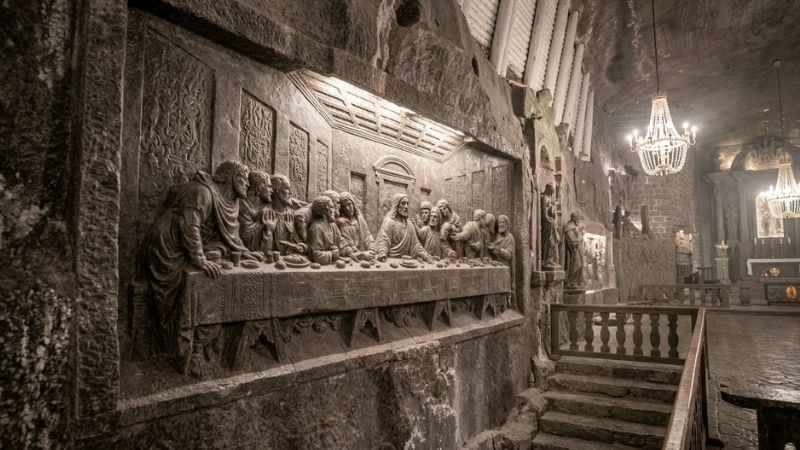
The Wieliczka Salt Mine is an underground wonder located just outside Krakow. Miners and artists created chapels, sculptures, chambers, and saline underground lakes or ponds within the mine.
Unlike a normal museum, you walk deep underground through tunnels and chambers carved entirely by hand. The Tourist Route generally takes about 2–3 hours and begins with a descent of approximately 380 steps. Advance reservations are strongly recommended, especially during peak periods, because visits operate according to scheduled tour availability.
Visit Auschwitz-Birkenau Respectfully
Auschwitz-Birkenau is a memorial and museum at the site of the former German Nazi concentration and extermination camp complex. It is not ordinary entertainment, and visitors should approach it with solemn respect.
The site consists of two main parts: Auschwitz I, which features brick blocks and exhibits, and Birkenau, a vast expanse of wooden barracks and railway tracks. The standard guided tour lasts about 3.5 hours; visitors exploring independently should allow sufficient time for both Auschwitz I and Birkenau. Auschwitz-Birkenau can be reached from Krakow by public transport or organized tour; allow substantial time for the journey and check current schedules. Advance reservation is strongly recommended and may be necessary when entry passes or guided-tour places are limited. Current reservations should be made through the official booking website., and you must follow dress and behavior guidelines.
Visit Poland’s Castles and Palaces
| Castle or Palace | Location | Historical Period | Time Required | Nearest Base |
|---|---|---|---|---|
| Malbork Castle | Malbork | Gothic fortress complex built by the Teutonic Order | 3–4 hours | Gdansk |
| Wawel Royal Castle | Krakow | A multi-period royal complex with major Gothic, Renaissance, and later elements | 2–3 hours | Krakow |
| Royal Castle | Warsaw | Historically multi-period royal residence, substantially reconstructed after World War II | 2 hours | Warsaw |
| Wilanow Palace | Warsaw | Baroque | 2 hours | Warsaw |
| Książ Castle | Walbrzych | A medieval-origin castle extensively remodelled in later architectural styles | 2–3 hours | Wroclaw |
Outdoor Activities in Poland
From rugged peaks to quiet forests and vast lake districts, Poland offers fantastic outdoor adventures.
Hike or Ski in the Tatra Mountains
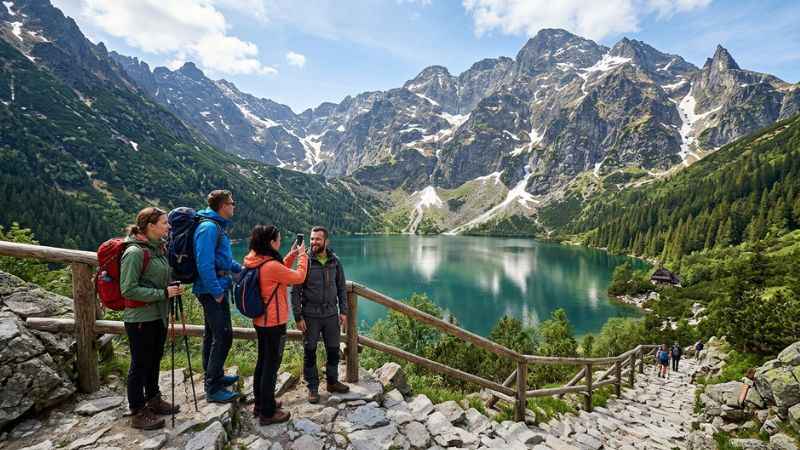
Zakopane serves as the main mountain gateway for exploring the dramatic Tatra Mountains.
- Morskie Oko: Morskie Oko is reached by a long, mostly paved uphill route; it is easier than technical mountain trails but still physically demanding and not universally accessible.
- Gubalowka: A popular hill overlooking Zakopane that you can reach by funicular railway for easy panoramic views. Check the current funicular operating schedule.
- Hiking Options: Trails range from easy forest walks to strenuous climbs for experienced mountaineers.
Always check local weather reports before heading into the mountains, as storms can roll in quickly. Proper footwear and warm layers are necessary even in summer.
See European Bison in Bialowieza
The Bialowieza Forest is one of Europe’s most important refuges for free-ranging European bison and supports a large population.
- Forest Walks: Access to the strict-protection area is restricted and requires an authorized guide; other parts of the national park have different access rules.
- Wildlife Etiquette: Keep a safe distance from animals and follow park rules closely.
- Sightings: Because the forest is vast and wild, bison sightings are never guaranteed, but spotting tracks and hearing wildlife makes the trip worthwhile.
Kayak or Sail in the Masurian Lake District
The Masurian Lake District contains a dense network of lakes connected in places by rivers and canals, making it a major sailing and kayaking region. It is one of Poland’s leading destinations for sailing and kayaking.
- Kayaking: Popular river routes offer peaceful paddling through forests and meadows.
- Sailing: Large interconnected lakes allow for multi-day sailing trips with stops in quiet lakeside villages.
- Best Season: Summer is generally the busiest period for sailing, kayaking, and lakeside tourism.
Polish Food and Local Experiences
Polish cuisine is hearty, comforting, and deeply tied to local traditions.
- Pierogi: Common fillings include meat, potato and farmer’s cheese, cabbage and mushrooms, and fruit.
- Zurek: Żurek is often served with sausage and egg, sometimes in a bread loaf.
- Bigos: A traditional hunter’s stew made with sauerkraut, fresh cabbage, and various meats.
- Placki Ziemniaczane: Crispy potato pancakes served plain or with mushroom sauce.
- Oscypek: A smoked sheep’s milk cheese from the mountain regions, often grilled and served with cranberry jam.
- Obwarzanek Krakowski: A braided ring of dough sold from street carts in Krakow.
What to Order in Each Destination
| Destination | Local Specialty to Try |
|---|---|
| Krakow | Obwarzanek krakowski and traditional pierogi |
| Zakopane | Grilled oscypek cheese with cranberry |
| Torun | Freshly baked Torun gingerbread |
| Warsaw | Warsaw: try żurek, which some restaurants serve in a bread loaf |
| Gdansk | Gdańsk: try regional fish dishes and herring where the restaurant identifies the source and season |
Best Things to Do by Traveler Type
| Traveler Type | Top Recommendations |
|---|---|
| For families | Copernicus Science Centre, Wroclaw dwarf hunt, Energylandia amusement park, Baltic beaches |
| For couples | Krakow evening walks, Gdansk waterfront dinners, Zakopane thermal baths, Attend a Chopin concert or seasonal outdoor performance, subject to the current programme. |
| For young adults | Krakow nightlife, Wroclaw river islands, kayaking trips, food halls |
| For repeat visitors | Torun, Zamość, Bieszczady mountains, Książ Castle, Masurian lakes |
Poland Itineraries by Trip Length
Three Days
Base yourself in Krakow. Spend two days exploring the Old Town, Wawel Castle, and Kazimierz, and use a separate day for Wieliczka or Auschwitz-Birkenau, depending on your interests, available entry time, and tolerance for a long day.
Five Days
Spend three days in Krakow, including its major day trips. A five-day Kraków–Warsaw itinerary is feasible, but check current train schedules and allow time for the intercity transfer and hotel change.
Seven Days
Combine Krakow and Warsaw, and add a coastal stop in Gdansk if you manage travel times well, or substitute the coast with a relaxing trip to Zakopane and the Tatra Mountains.
When to Visit Poland
| Season | Best Activities | Watch-Outs |
|---|---|---|
| Spring | City walks, museums, parks | Variable weather |
| Summer | Hiking, Baltic beaches, lakes, festivals | Crowds and higher demand |
| Autumn | Foliage, museums, food, city breaks | Shorter daylight |
| Winter | Skiing, Christmas markets, thermal baths | Cold, snow, reduced daylight |
Practical Planning Tips
- What to Book in Advance: Check each attraction’s official ticket system. Advance booking is especially advisable for Auschwitz-Birkenau, Wieliczka, Schindler’s Factory, and other high-demand museums during peak periods.
- Getting Around: Poland has an extensive rail network. PKP Intercity operates many long-distance routes, while regional operators serve local and regional connections. A car is most useful for remote rural areas, dispersed castles, and some national parks, although many major destinations can be reached by train or bus.
- Budget: Poland may offer lower travel costs than some Western European destinations, but prices vary substantially by city, season, accommodation, and exchange rate. You can travel comfortably on a mid-range budget, enjoying nice meals and comfortable hotels without overspending.
FAQ: Things to Do in Poland
What are the best things to do in Poland?
The top activities include exploring Krakow’s Main Market Square, touring the Wieliczka Salt Mine, walking through Warsaw Old Town, hiking in the Tatra Mountains, and discovering Gdansk’s historic waterfront.
What is Poland famous for?
Poland is famous for its medieval castles, pierogi and hearty cuisine, World War II history, salt mines, and beautiful natural landscapes ranging from Baltic beaches to southern mountains.
Is Poland worth visiting for a first-time traveler?
Poland is generally considered a safe destination, but travelers should follow normal precautions and consult current government travel advice.
Is Krakow or Warsaw better for a first trip?
Krakow is generally better for a first trip if you prefer a compact, historic old town that survived the war intact, while Warsaw offers deeper modern history and dynamic museum experiences.
How many days do you need in Poland?
Allow about five to seven days for a comfortable first trip combining Kraków and Warsaw, with additional time for major day trips.
What are the best things to do in Poland with kids?
Families enjoy visiting Energylandia amusement park, hunting for bronze dwarfs in Wroclaw, exploring the Copernicus Science Centre in Warsaw, and relaxing on Baltic beaches.
What are some unique things to do in Poland?
Unique activities include exploring underground salt chapels, hunting for hidden street dwarfs in Wroclaw, tasting spiced gingerbread in Torun, and soaking in thermal mountain baths.
Can you visit Auschwitz and Wieliczka in one day?
While some guided tours combine both sites in a single long day, visiting them separately gives you enough time to experience each location properly without rushing.
Editorial Note: Check official attraction websites for current opening hours, ticket prices, and reservation policies before finalizing your travel plans.
You May Also Like:
Things to do in Lisbon: A Practical Guide for First-Time Visitors
Things to Do in Iceland (2026–27): The Local-Approved Bucket List + Ready-Made Itineraries