Last Updated: 02/Nov/2026
The best things to do in Eureka Springs, Arkansas, are a walk through the historic downtown, a visit to Thorncrown Chapel, and a day at Lake Leatherwood City Park. If you have more time, add a cave, a wildlife refuge, or a ghost tour. This guide helps you pick what fits your days, your energy, and your group. It also covers parking, the trolley, steep streets, and seasonal closures. Hours and prices change, so check each attraction’s own website before you go.
Best Things to Do in Eureka Springs at a Glance
This list favors places with clear official information. The times below are rough estimates, not official numbers. Your pace and your group will change them.
| Attraction | Best for | Where | Rough time (estimate) | Cost | Check first |
|---|---|---|---|---|---|
| Historic downtown and Basin Spring Park | First-time visitors | Downtown | 2 to 4 hours | Free to walk. Parking, tours, and shops cost extra. | Parking rules, event dates |
| Eureka Springs Historical Museum | History, rainy days | Downtown | About 1 hour | $5 admission (museum site) | Open days, stairs |
| Thorncrown Chapel | Architecture, quiet time | 1.5 miles west of downtown | 45 to 90 minutes | Check the chapel’s site | Closed Jan. and Feb., early closures |
| Lake Leatherwood City Park | Hiking, biking, boating | 5 miles north of downtown | 2 hours to a full day | Check the city parks page | Trail and facility news |
| Black Bass Lake | Short walk | Close to downtown | About 1 hour | Check the city parks page | Trail conditions |
| Turpentine Creek Wildlife Refuge | Big cats, families | 7 miles south on Highway 23 | 2 to 4 hours | Paid | Hours, last tour time |
| Onyx Cave Park | Caves, families | About 6 miles from downtown | 1 to 2 hours | Paid | Season and hours |
| 1886 Crescent Hotel | History, ghost tours | Downtown hilltop | About 2 hours for the ghost tour | Paid tours | Tour times, booking |
| Blue Spring Heritage Center | Gardens, a large spring | Outside town | 1 to 2 hours | Paid | Season, admission |
Explore Historic Downtown Eureka Springs
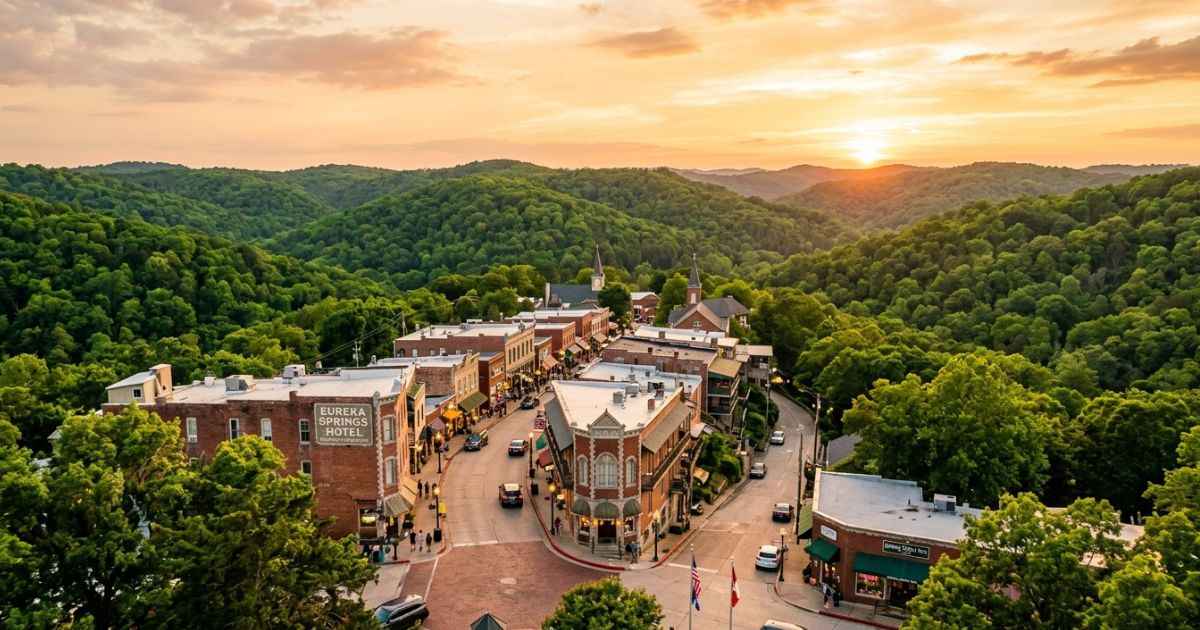
Eureka Springs grew fast. Visit Eureka Springs says a “tent city” of about 10,000 people became a Victorian health resort with 54 hotels. That history still shapes the town. Its buildings cling to hillsides, and its streets twist and climb.
Walk the Historic Streets
Spring Street and the surrounding historic district have preserved old buildings, shops, and galleries. The streets are steep, and some routes use stairs. Wear shoes with good grip. Plan rest stops, especially in summer.
Start at Basin Spring Park
Basin Spring Park is a good place to get your bearings. The city parks department calls it the cultural heart of the community, with concerts and local artisans. Events change by season. Check the Visit Eureka Springs event listings for dates before you plan around music.
Visit the Eureka Springs Historical Museum
The museum sits at 95 S. Main Street in the 1889 Calif House. Its self-guided exhibits cover the healing springs, pioneer life, the Victorian resort years, and the town’s arts scene. It is also an official visitor center with free maps.
The museum lists a $5 admission and says it is closed on Sundays and Wednesdays. Your ticket includes one hour of free parking, but spaces are limited.
The building has no elevator. The first floor works for strollers, scooters, walkers, and wheelchairs, with one step at the front porch. The second floor needs stairs. The museum offers discounted admission if you only tour the first floor. See the museum’s visit page for current details.
Ride the Trolley
The trolley saves you from hunting for parking. Visit Eureka Springs lists trolley parking at $5 per day. All-day passes cost $6 for adults and $2 for children ages 7 through 11. The Red Route runs the historic downtown loop. The Blue Route covers the east side, including the Passion Play area.
Service changes with the season. Winter service is limited on some routes. Check Eureka Springs Transit for current maps and times. The Transit & Welcome Center on Highway 62 is the usual place to buy passes.
See the Best-Known Landmarks
Thorncrown Chapel
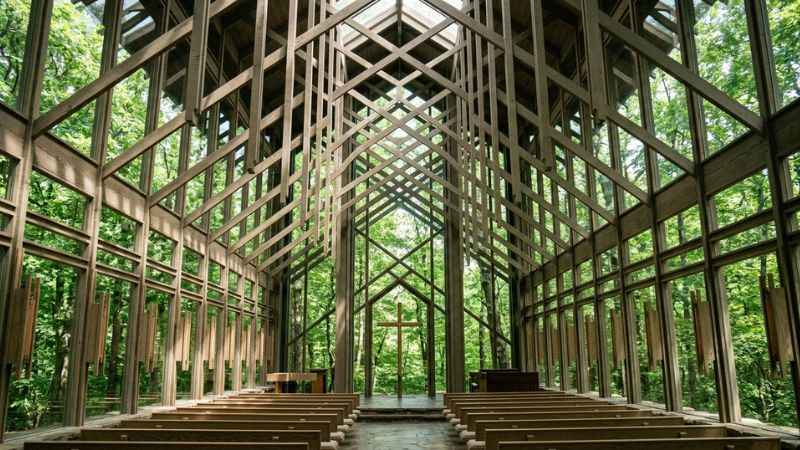
Thorncrown Chapel is a glass and wood church in the Ozark woods. It stands 48 feet tall and has 425 windows and more than 6,000 square feet of glass. E. Fay Jones designed it, and it opened in 1980. It sits 1.5 miles west of town on Highway 62 West. The chapel warns that GPS often shows the wrong spot, so use the address on its site.
Plan around the calendar. The chapel’s own site says it is closed in January and February, except for weddings and special events. Visiting hours run seven days a week from March through December. Hours can change with the wedding schedule, so call to confirm. Listings differ on exact hours, and some show shorter days in March and December.
Sunday services run at 9 a.m. and 11 a.m. from April through October. From November to the third week of December, there is one service at 11 a.m. Visit at another time if you want a quiet look. Travel listings report that entry is free and donations are welcome. Confirm that on the chapel’s website.
Christ of the Ozarks and The Great Passion Play
Christ of the Ozarks is a seven-story statue built in the 1960s. It stands on the grounds of The Great Passion Play at 935 Passion Play Road. You can see it from the historic district. The grounds also have a Bible museum, a Sacred Arts Center, and a Holy Land area, according to the Encyclopedia of Arkansas.
The Great Passion Play is an outdoor drama about the last week of Jesus’s life. Recent seasons have run from late spring into November, with extra shows near Easter. Season dates and show times change each year. Visit the official Great Passion Play site for the schedule. Sources disagree on when the statue and grounds are open, so confirm access before you drive up.
The 1886 Crescent Hotel
The Crescent Hotel opened in May 1886 as a luxury resort. It still operates as a hotel at 75 Prospect Avenue. Over the years the building also served as a hospital, and the hotel’s ghost stories draw on that chapter.
The hotel markets itself as “America’s most haunted hotel.” Treat the ghost tours as entertainment. Guides tell reported legends alongside hotel history, and no one has proven the paranormal claims. Past visitor reports describe a tour of about two hours. Check the hotel’s website for current tours, times, and booking rules.
Enjoy the Outdoors Around Eureka Springs
Lake Leatherwood City Park
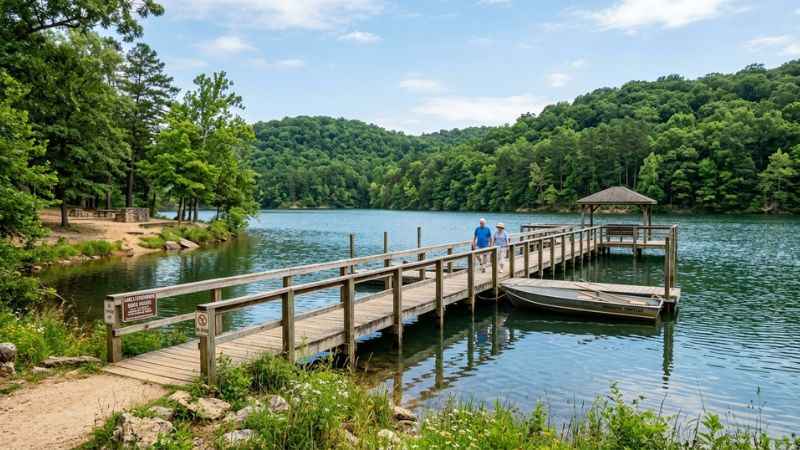
Lake Leatherwood is the largest outdoor stop near town. It covers 1,610 acres and sits about five miles north of downtown. The park has an 85-acre spring-fed lake. The lake is held by one of the largest hand-cut limestone dams in the country. The park is on the National Register of Historic Places, and Depression-era crews built several of its structures in the early 1940s.
The city parks department lists more than 25 miles of trails for hiking and biking. It also lists boating, fishing, a playground, cabins, camping, and RV sites. Visit Eureka Springs has also described a bike park with downhill lines.
How long you stay depends on your plan:
- A short lake visit: about two hours.
- A family outing with the playground: half a day.
- Hiking or mountain biking: a full day.
Trail conditions change. Check the city parks page before you go.
Black Bass Lake
Black Bass Lake is a smaller park close to downtown. Visit Eureka Springs describes a 1.8-mile loop around the lake. The park has an old stone dam that locals date to 1894. Some trail sections are steep near the start and end.
Choose Black Bass for a short, easy outing. Choose Lake Leatherwood when you want more trails, more water, and more time.
Regional Lakes and Rivers
Beaver Lake, Table Rock Lake, and the White River offer boating and fishing. Arkansas Tourism describes them as regional outdoor spots. They are not downtown stops. Look up the drive time and your outfitter before you commit a full day.
Ziplining and Horseback Riding
Visit Eureka Springs lists ziplines, horseback riding, and an adventure park among local activities. Operators set their own hours, age limits, and weight limits. Book directly with the company, and read its rules first.
Caves, Wildlife, and Unusual Stops
Onyx Cave Park
Onyx Cave is at 338 Onyx Cave Lane, about six miles from downtown. The chamber of commerce calls it Arkansas’s oldest toured cave. Tours began in 1893. Sources describe a self-guided tour with audio narration that takes about 30 minutes. The park also lists other activities, such as gem panning and axe throwing.
Sources disagree on its season and hours. One chamber listing shows March through late November. Another source says it is open year-round. Call or check the park’s website before you drive out.
Cosmic Cavern and War Eagle Cavern are other nearby show caves. Each has its own tours, rules, and prices. Do not assume they match Onyx Cave.
Turpentine Creek Wildlife Refuge
Turpentine Creek is a nonprofit rescue for animals that survived the exotic pet trade. It was founded in 1992 and cares for big cats and other animals. The refuge sits about seven miles south of town on Highway 23.
The refuge posts general hours of 9 a.m. to 4 p.m., and 9 a.m. to 5 p.m. during daylight saving time. Tram tours leave on the hour, and the last tour leaves one hour before closing. Some specialty tours are small and need advance booking. See the refuge’s visit page for current hours, tickets, and tour types.
Blue Spring Heritage Center
Blue Spring is the largest spring in northwest Arkansas. Visit Eureka Springs says it flows about 38 million gallons of water each day. The site was once Eureka Springs Gardens, and it became the Blue Spring Heritage Center in 2003. It includes gardens and a historic bluff shelter.
It is a seasonal attraction. Listings show a season from mid-March to mid-November, but admission prices vary by source. Check the center’s website for dates and tickets. The Explore Northwest Arkansas guide also features it as a lesser-known stop.
Pick Activities by Interest
For Couples
Mix slow and active stops. Walk downtown in the morning, then visit Thorncrown Chapel. Book a ghost tour or a show for the evening. If only one of you wants to hike, pair a short Black Bass Lake loop with a museum visit.
For Families With Kids
Caves, Turpentine Creek, and Lake Leatherwood’s playground suit many ages. The Crescent Hotel has offered a kids’ ghost tour, so ask the hotel if it runs now. Pick trails by age and ability. Build in snack and rest breaks.
If your group spans ages, check stairs and walking distances first. The museum’s second floor and downtown hills can be hard for some visitors.
Free Things to Do
Walking downtown and relaxing in Basin Spring Park do not require a ticket. Thorncrown Chapel is reported to be free, with donations welcome. Free admission does not mean a free day. Parking, trolley passes, and meals add up. Trolley parking costs $5 a day, and downtown has paid lots and meters.
When It Rains
The Historical Museum and the Crescent Hotel are indoor stops. Onyx Cave is underground, though you may walk outdoors to reach it. Galleries and shops fill the rest of the day. Check each place’s hours first, since several are closed on certain days.
Plan One Day or Two Days
One Day for First-Timers
- Morning: Park once and walk downtown. Stop at Basin Spring Park.
- Late morning: Tour the Historical Museum, or ride the trolley.
- Afternoon: Drive to Thorncrown Chapel. Skip this in January and February.
- Evening: Eat downtown, then join a ghost tour if tickets are available.
Two Days, History and Outdoors
- Day one: Spend it downtown, at the museum, and at the Crescent Hotel.
- Day two, morning: Hike or bike at Lake Leatherwood, or walk the Black Bass Lake loop.
- Day two, afternoon: Visit Turpentine Creek or a cave.
Lake Leatherwood is north of downtown, and Turpentine Creek is south. Allow driving time between them. If time is tight, pick one.
Practical Tips Before You Go
Parking and Getting Around
Parking is limited downtown. The museum lists paid parking through the ParkMobile app, and city lots use the Passport Parking app. The museum says city meters are free after 6 p.m. If you stay downtown, ask your lodging about parking. For day trips, the trolley parking and pass can be easier than circling for a spot.
Thorncrown Chapel, Lake Leatherwood, Turpentine Creek, and the caves sit outside the walkable core. Most visitors drive to them. Visit Eureka Springs has listed Lake Leatherwood as a by-request trolley stop, so confirm service with Eureka Springs Transit.
Accessibility and Steep Streets
Downtown has hills and stairs. The trolley can help visitors who find walking hard. The museum’s first floor works for wheelchairs and walkers, but its second floor does not. Ask each attraction about its own access before you go.
What to Book Ahead
Check ghost tours, specialty wildlife tours, ziplines, and plays. Ask whether your cave or refuge tour needs a booking. Weekends and big events fill up fast, and so does lodging.
What to Check by Season
These examples show why dates matter:
- Thorncrown Chapel is closed in January and February, except for events.
- Blue Spring Heritage Center lists a mid-March to mid-November season.
- The Great Passion Play runs on a spring-to-fall schedule.
- Turpentine Creek changes its hours with daylight saving time.
- Onyx Cave’s season varies by source.
Look at official calendars before you book lodging around one attraction.
Frequently Asked Questions
Is Eureka Springs worth visiting?
It suits people who like historic buildings, Ozark scenery, and a mix of indoor and outdoor stops. It is a small town with steep streets. If stairs and hills are a problem, plan around the trolley and check access first.
How many days do you need in Eureka Springs?
One day covers downtown and one landmark, such as Thorncrown Chapel. Two days give you time to add a hike, a wildlife refuge, or a cave. These are suggestions, not rules.
Is downtown Eureka Springs walkable?
Yes, but it is hilly. Many stops are close together, yet the streets are steep and some routes use stairs. The trolley helps when your legs need a break.
What are the best free things to do in Eureka Springs?
Walk the historic streets and visit Basin Spring Park. Thorncrown Chapel is reported to be free, with donations welcome. Keep parking and trolley costs in mind.
What can you do in Eureka Springs when it rains?
Try the Historical Museum, a hotel tour at the Crescent, or a cave. You can also browse galleries and shops. Check hours first, since the museum is closed two days a week.
Is Thorncrown Chapel open in winter?
It is closed in January and February, except for weddings and special events. It is open to visitors from March through December. Hours can change with the wedding schedule, so call ahead.
Do you need a car in Eureka Springs?
Not for downtown, where you can walk or ride the trolley. You will want a car for Thorncrown Chapel, Lake Leatherwood, Turpentine Creek, and the caves. Fayetteville is about 45 miles and an hour away, according to Explore Northwest Arkansas.
You May Also Like:
Ultimate Guide: Top Things to Do in Orlando (Theme Parks, Nature & Culture)
Things to Do in Leavenworth, WA: 30+ Best Attractions, Activities & Hidden Gems