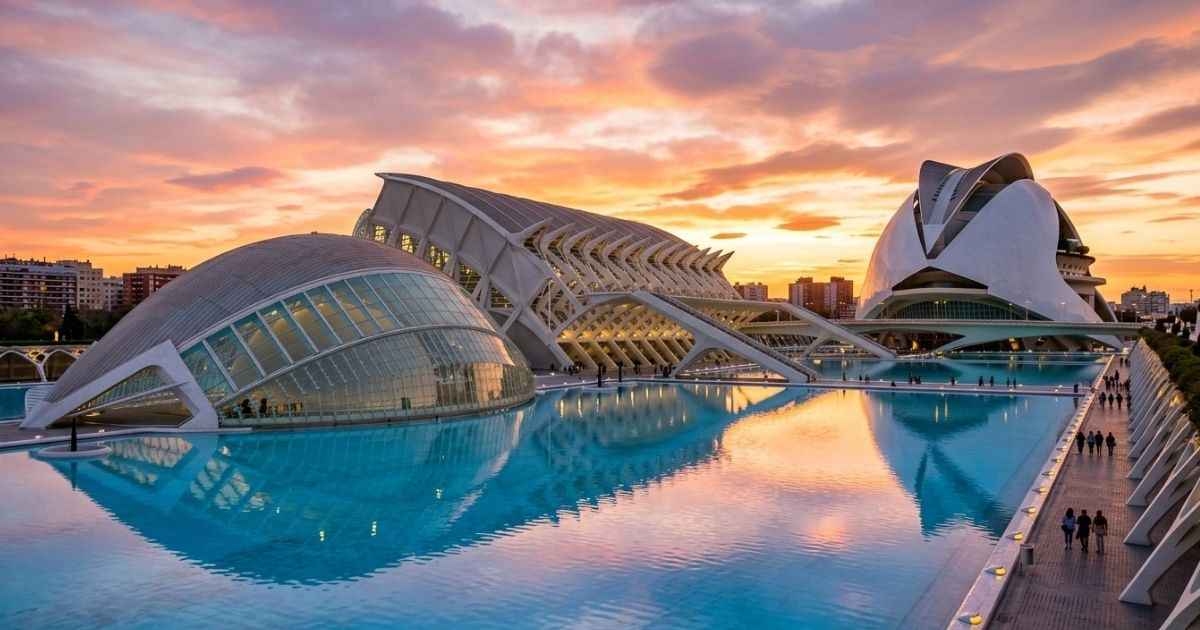
In three days, you can explore futuristic art museums, bike through a nine-kilometer riverbed park, wander medieval old town streets, eat authentic wood-fired paella, and relax on a sandy beach. Valencia is a coastal city in eastern Spain where medieval history meets modern design, and it is the true birthplace of Spain’s most famous rice dish. This strategic things to do in Valencia guide helps you prioritize experiences based on your interests while avoiding overpriced tourist traps.
Must-See Attractions in Valencia (Prioritized by Interest)
For Architecture and Modern Design Lovers: City of Arts and Sciences
The City of Arts and Sciences is a massive futuristic cultural complex designed by famous architect Santiago Calatrava. It features bright white curves and sparkling blue reflecting pools that look like a sci-fi movie set. Arrive right at the ten o’clock opening time to beat the afternoon crowds and midday heat. Buying combo tickets on the official website saves you between five and ten euros compared to buying separate admissions.
| Attraction | What It Is | Ticket Price (2026) | Time Needed | Best For |
| Oceanogràfic | Europe’s largest marine aquarium with underwater glass tunnels | €41.80 – €43.05 | 3 – 4 hours | Families and marine life fans |
| Science Museum | Interactive hands-on physics and technology exhibits | Check official site | 2 hours | Curious minds and kids |
| Hemisfèric | IMAX cinema and planetarium shaped like a giant eye | Check official site | 1.5 hours | Film and architecture buffs |
For History Buffs: Valencia Cathedral, La Lonja, and Medieval Gates
Valencia Cathedral is a striking Gothic church that claims to house the authentic Holy Grail chalice used at the Last Supper. You can climb the two hundred steps up the Miguelete Tower for a fee of €3 to enjoy sweeping panoramic views of the city.
La Lonja de la Seda is a UNESCO-listed 15th-century silk exchange featuring twisting stone pillars and a dramatic Gothic hall. Admission costs €2, and you need about thirty to forty-minutes to explore it.
You should also check out the Torres de Serranos and Torres de Quart, which are the massive medieval stone gates that once protected the old city. For €16 to €18, visit the Iglesia de San Nicolás, often called Valencia’s Sistine Chapel because of its breathtaking vaulted ceiling frescoes. Plan to spend about €30 to €35 total for tickets to all major historical sights in the old town (Cathedral €12, Miguelete €3, La Lonja €2, San Nicolás €16).
For Nature and Outdoor Enthusiasts: Turia Gardens and Beaches
The Turia Gardens form a nine-kilometer long green park built inside a diverted riverbed that snakes around the city. It is entirely car-free and features palm trees, sports fields, orange groves, and playgrounds.
Renting a bike is the best way to explore the park, with half-day rentals costing between €8 and €15. You can also use the Valenbisi bike-share system, which offers a weekly pass for €13.30. A great route starts near the Bioparc zoo, takes you through the gardens, and ends at the City of Arts and Sciences.
Malvarrosa Beach is an urban beach with a wide sandy shoreline, a lively boardwalk, and many seafood restaurants. It is easily reached by taking tram line four or six directly from the city center. If you want a quieter coastal escape, head thirty minutes south to El Saler Beach, which sits quietly inside the edge of the Albufera Natural Park.
For Foodies: Mercado Central and Neighborhood Food Scenes
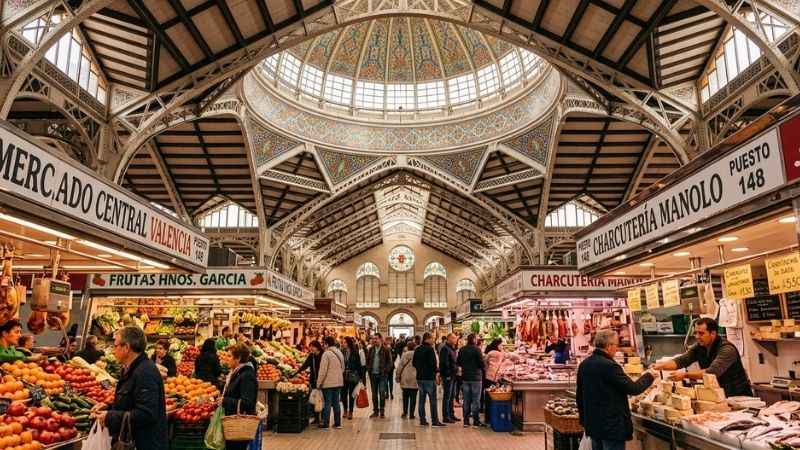
Mercado Central is a bustling public market housed inside a stunning modernist dome of iron, glass, and colorful tiles. It is open Monday to Saturday from 7:30 AM to 3:00 PM, and it is closed on Sundays and public holidays.
After the market, wander into El Carmen, the medieval old town neighborhood filled with narrow cobblestone alleys, striking street art, and hidden tapas bars. Later, head south to Ruzafa, a trendy district known for specialty coffee shops, art galleries, and vibrant evening cocktail bars.
Where to Eat Authentic Paella in Valencia (And Where to Avoid)
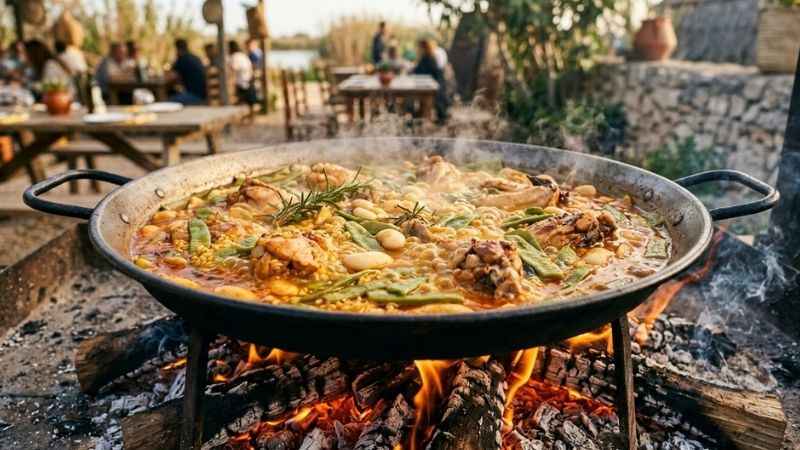
Traditional paella is a sacred lunchtime ritual in this region, and locals follow strict culinary rules. Authentic paella valenciana is made with chicken, rabbit, flat green beans, local garrofó beans, olive oil, sweet paprika, rosemary, and water, all cooked over an open orange-wood fire. It never contains seafood, peas, or chorizo.
A well-cooked paella features a prized crispy toasted rice bottom at the base of the pan known as the socarrat. Valencians traditionally eat paella only at lunchtime, never for dinner, because heavy rice dishes require a long afternoon to digest.
| Restaurant Name | Location | Price Range | Specialty | Reservation Needed? |
| Bon Aire | El Palmar (Albufera) | €12 – €18 | Wood-fired traditional paella | Yes, essential on weekends |
| Arrocería Maribel | El Palmar (Albufera) | €20 per serving | Authentic local rabbit and chicken rice | Yes, highly recommended |
| Casa Carmela | Malvarrosa Beach | Unverified | Wood-fired paella | Check ahead |
| La Pepica | Malvarrosa Beach | €18 – €22 | Historic spot | Yes, popular with tourists |
| La Riua | Old Town | Unverified | Historic venue | Check ahead |
To avoid tourist traps, stay away from old town restaurants that advertise seafood paella on laminated multilingual menus with picture boards outside. Real paella spots in the center are rare, so you should travel to El Palmar or book tables at trusted local spots that only serve lunch.
Other Valencian Food to Try
- Agua de Valencia is a refreshing local cocktail made from sparkling cava, fresh orange juice, gin, and vodka, usually served in large glass pitchers.
- Horchata with Fartons is a sweet, milky drink made from pressed tiger nuts, served alongside long, soft, sugar-glazed pastries for dipping.
- Arroz al Horno is a hearty, oven-baked rice casserole made with pork ribs, potatoes, garlic, and blood sausage.
Valencia Itineraries: How to Spend 1, 2, or 3 Days
1 Day in Valencia (The Essentials)
Spend your morning walking through the old town to see the Cathedral, La Lonja, and Mercado Central for a quick market lunch. Spend your afternoon riding a bike through the green paths of the Turia Gardens. Spend your evening relaxing with tapas and drinks in the narrow streets of El Carmen.
2 Days in Valencia (Add Beaches or Museums)
Follow your complete one-day old town and park itinerary for your entire first day. Dedicate your second day to exploring the futuristic exhibits at the City of Arts and Sciences in the morning and relaxing on Malvarrosa Beach in the afternoon.
3 Days in Valencia (The Ideal Visit)
Day one covers the historic old town, market browsing, and an afternoon bike ride through Turia Gardens. Day two takes you to the Oceanogràfic aquarium and the Science Museum, followed by dinner in trendy Ruzafa. Day three is a rewarding day trip to Albufera Natural Park for a peaceful boat ride and authentic wood-fired paella in El Palmar.
Practical Tips for Visiting Valencia
Safety and Scams to Avoid
Valencia is generally a very safe European destination, but petty theft and pickpocketing remain common in crowded areas. Watch your belongings closely while walking along Malvarrosa Beach, riding packed metro cars during rush hour, and attending the massive Las Fallas festival in March.
Always use zipped crossbody bags instead of loose backpacks when walking through crowds. Never leave your phone or wallet resting openly on outdoor cafe tables, and keep your passport locked safely in your hotel room safe.
Best Time to Visit
The ideal months to visit Valencia are from March to May when the weather is comfortably warm and the famous Las Fallas festival takes place in March. September and October offer wonderful swimming weather with far smaller crowds than the peak summer months. Avoid traveling in August if possible, because extreme heat settles in and many local family-owned shops close for holiday break.
Getting Around
The historic center of Valencia is compact, flat, and entirely pedestrian-friendly, making it easy to explore on foot. The flat terrain and dedicated bike lanes make cycling through Turia Gardens fast and cheap using public rental bikes. Single metro and bus rides cost between €1.50 and €2.00, while public buses run directly to nearby coastal spots like Albufera.
Budget Breakdown (Free vs. Paid)
- Free Attractions: Walking through Turia Gardens, browsing Mercado Central, visiting sandy public beaches, and viewing church exteriors.
- Paid Attractions: Entering the Oceanogràfic aquarium (€41.80 – €43.05), climbing the Cathedral Miguelete Tower (€3), and touring La Lonja (€2).
- Average Daily Cost: Budget travelers spend €40 to €60 daily using hostels and market food, mid-range travelers spend €80 to €120 for hotels and restaurant meals, and luxury travelers spend €150 or more.
Common Mistakes Tourists Make in Valencia (And How to Avoid Them)
- Ordering seafood paella in the old town means you are paying for an inauthentic tourist meal instead of a true local recipe.
- Overpacking your daily schedule with six different sights leads to burnout; limit yourself to two or three major activities per day.
- Skipping the Turia Gardens means missing out on the green heart and soul of the city’s outdoor lifestyle.
- Expecting completely wild and secluded cove beaches at Malvarrosa ignores the fact that it is a busy urban beach destination.
- Leaving your bags unattended on the sand while swimming invites opportunistic thieves to steal your belongings.
- Visiting the Oceanogràfic aquarium on a packed Saturday afternoon creates massive lines; go on a weekday morning instead.
Frequently Asked Questions (FAQ)
What should I not miss in Valencia?
You should not miss the futuristic City of Arts and Sciences, a bike ride through the Turia Gardens, the historic Valencia Cathedral, Mercado Central, and a plate of authentic wood-fired paella.
Is 3 days enough in Valencia?
Yes, three days gives you plenty of time to explore the major sights, relax on the beach, and enjoy a day trip to the nearby natural park. Two days is also doable if you keep a fast pace.
What is Valencia best known for?
Valencia is best known as the birthplace of traditional paella, its striking futuristic architecture by Santiago Calatrava, the nine-kilometer Turia park, and the spring Las Fallas festival.
Where can I eat authentic paella in Valencia?
You can eat authentic paella at specialized restaurants in El Palmar like Bon Aire or Arrocería Maribel. Always avoid seafood paella served in old town tourist restaurants.
Is Valencia safe for tourists?
Valencia is a safe city for travelers, but you must stay alert for pickpockets at beaches, on crowded public transit, and during large festivals. Use a zipped crossbody bag and keep your phone secure.
What are free things to do in Valencia?
You can explore the massive Turia Gardens, browse the food stalls inside Mercado Central, relax on public sandy beaches, and admire historic old town architecture without spending any money.
How much does Oceanogràfic cost?
Standard adult tickets for the Oceanogràfic aquarium range from €41.80 to €43.05 depending on the season, while reduced tickets are around €31 to €32. Children under four enter for free.
What is the best time to visit Valencia?
The best months to visit are between March and May for pleasant spring weather and festival celebrations, or September and October for warm autumn beach days without heavy summer crowds.
Why Valencia Deserves More Than a Day Trip
Valencia is a destination that rewards slow travel and deep exploration. Rent a bike to roll beneath leafy bridges in the riverbed park, linger for hours over a wood-fired rice lunch in El Palmar, and get lost inside the quiet winding alleys of El Carmen.
Start planning your trip by checking out our detailed three-day itinerary to make the most of your time in Spain’s coastal gem.
You May Also Like:
Things to Do in Marseille: The Complete 2026 Guide
25 Best Things to Do in Dubrovnik, Croatia: Sights, Beaches, Tours and Itineraries