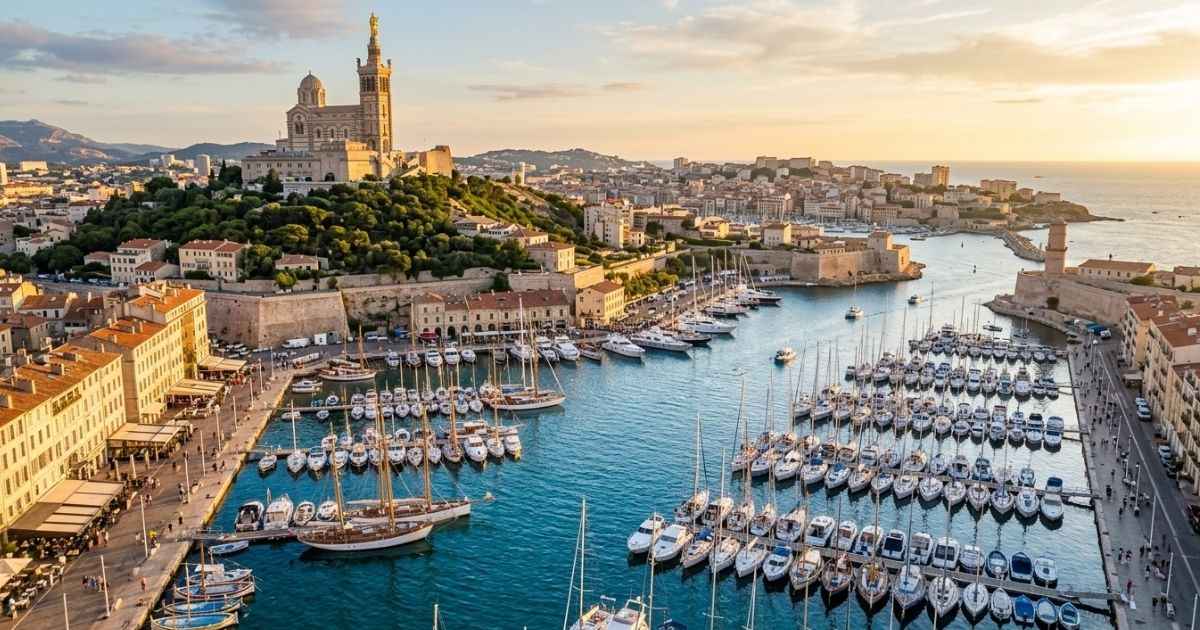
Planning a trip means looking for the best things to do in Marseille to experience France’s oldest city like a local. Marseille is a sun-drenched Mediterranean port city filled with historic landmarks, wild limestone coves, and rich cultural traditions. Travelers find a vibrant urban revival that blends gritty history with modern art, world-class seafood, and stunning coastal nature.
- Notre-Dame de la Garde: A hilltop basilica offering 360-degree panoramic city views.
- Vieux-Port (Old Port): A historic working harbor with a morning fish market and waterfront dining.
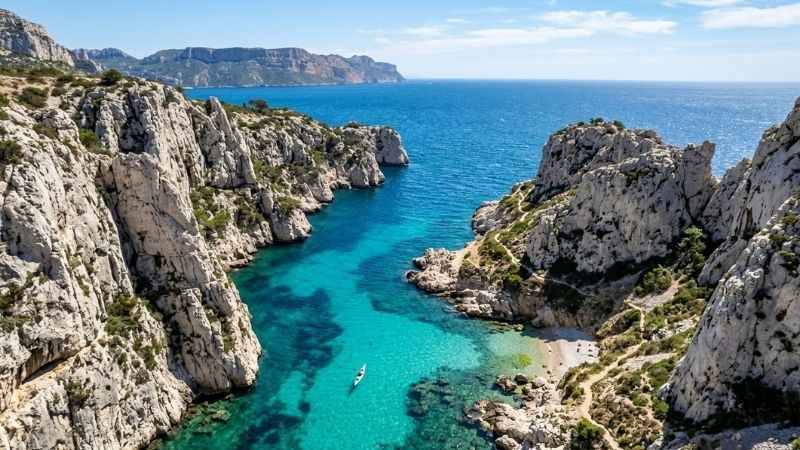
- Calanques National Park: Dramatic limestone coves with turquoise water for hiking and swimming.
- MuCEM: A striking modern museum dedicated to European and Mediterranean civilizations.
- Le Panier: The oldest neighborhood filled with steep cobblestone alleys and vibrant street art.
- Château d’If: A historic island fortress famous from The Count of Monte Cristo.
- Palais Longchamp: A grand 19th-century monument with cascading fountains and museums.
- Vallon des Auffes: A picturesque and peaceful traditional fishing harbor.
- Underwater Museum: A unique collection of submerged sculptures near Plage des Catalans.
- Cours Julien: A bohemian district known for nightlife, cocktail bars, and murals.
Most visitors need two to three days to balance cultural sights with natural escapes. Safe neighborhoods, affordable public transit, and smart planning make this port city an unforgettable stop.
Iconic Landmarks You Can’t Miss
Notre-Dame de la Garde sits on the highest point in the city, watching over sailors and locals alike. This 19th-century Neo-Byzantine basilica features a glittering golden Madonna statue on its bell tower. Visitors can take Bus 60 directly from the Old Port or walk up the steep hillside stairs in thirty minutes. Entry to the church is completely free, and the best time to visit is during the quiet morning hours or at sunset.
The Vieux-Port serves as the social heart of the city where boats dock and locals gather at outdoor cafes. Visitors watch fishermen sell their fresh catch every morning right on the stone quays. Ferries depart from this harbor toward the Frioul Islands and Château d’If. Historic waterfront restaurants line the edges, offering front-row views of the bobbing yachts.
Palais Longchamp is a monumental architectural water tower built to celebrate the arrival of fresh canal water. Cascading fountains flow down its center into grand pools surrounded by public park grounds. The flanking wings house the city fine arts museum and natural history museum. Admission to the surrounding park is free for everyone every day.
Marseille Cathedral, known locally as La Major, stands proudly near the port with unique striped green and white stone walls. This Romano-Byzantine structure features soaring vaulted ceilings. A short twenty-minute walk covers the interior art and grand marble flooring.
Abbaye Saint-Victor is a fortified medieval abbey that represents one of the oldest places of Christian worship in France. Ancient crypts hold stone sarcophaguses dating back to early Christian centuries. A quick stroll here pairs well with any walk around the nearby southern docks.
| Attraction | Neighborhood | Time Needed | Cost (2026) | Best For |
| Notre-Dame de la Garde | 6th Arrondissement | 1-2 hours | Free | Panoramic views |
| Vieux-Port | 1st Arrondissement | 2-3 hours | Free | Maritime culture |
| Palais Longchamp | 4th Arrondissement | 1-2 hours | Free (Park) | Gardens, architecture |
| La Major | 2nd Arrondissement | 30 minutes | Free | Romano-Byzantine design |
| Abbaye Saint-Victor | 7th Arrondissement | 30 minutes | Free | Early Christian history |
Explore Marseille’s Best Neighborhoods
Le Panier is the oldest quarter in the city, featuring winding pedestrian streets and pastel-colored buildings. Local artists decorate the brick walls with colorful murals, handmade pottery signs, and creative paste-ups. Mornings offer the quietest time to explore before crowds fill the artisan chocolate shops. Visitors should keep bags zipped securely while walking through these narrow alleys.
Cours Julien acts as the creative and bohemian hub for younger locals, street artists, and independent musicians. Independent bookstores, vintage clothing boutiques, and bustling cocktail lounges fill every corner of this sloping square. The walls feature massive graffiti murals that change seasons regularly. Evenings here bring a lively crowd to outdoor terraces and music venues.
Corniche Kennedy is a scenic coastal road that hugs the rocky Mediterranean shoreline for several kilometers. Walkers enjoy uninterrupted sea views, rocky drop-offs, and historic nineteenth-century mansions along the sidewalk. Bus 83 runs along the Corniche Kennedy from Arenc to Saint Giniez, passing the Vieux-Port area. Sunset walks along this path reveal deep orange skies over the open sea.
Endoume is a quiet residential area stretching down toward hidden swimming coves and local seafood shacks. Travelers escape tourist crowds by walking down the rocky paths toward hidden water edges. Local trattorias serve simple pasta dishes and fresh catches to neighborhood regulars.
Noailles is a multicultural market district centered around the bustling Rue du Marché des Capucins. Stalls overflow with North African spices, fresh olives, dried fruits, and affordable street snacks. This busy market area requires high alertness during peak daytime hours, and visitors should avoid it late at night.
Museums and Culture
MuCEM stands as a cutting-edge architectural masterpiece built right on the edge of the blue Mediterranean Sea. A delicate concrete lace lattice wraps around the modern cube building, which connects to an old fort via a footbridge. Exhibits focus entirely on the history, shared heritage, and art of Mediterranean cultures. Adult tickets cost €12.50, and admission is free on the first Sunday of every month.
Fort Saint-Jean is a seventeenth-century military fortification directly connected to the MuCEM museum complex. Visitors wander through old defensive walls, elevated stone ramparts, and historic watchtowers. Rooftop walkways offer sweeping views across the entire harbor entrance and passing cargo ships.
Musée Subaquatique is an underwater museum located just one hundred meters off the sandy Plage des Catalans. Snorkelers dive down five meters to view ten distinct submerged art sculptures anchored to the sea floor. Bringing personal masks and snorkels keeps this unique marine experience entirely free.
| Museum | First Sunday Free? | Other Free Entry Rules |
| MuCEM | Yes | Under 18, teachers, job seekers |
| Musée des Beaux-Arts | Yes | Under 18 years old |
| Musée Cantini | Yes (Permanent collection) | Under 18 years old |
| Musée d’Histoire de Marseille | Always free | N/A |
| Centre de la Vieille Charité | Yes | Under 18 years old |
The Calanques: Hiking, Swimming, and Boat Tours
Calanques National Park protects a stunning stretch of dramatic limestone cliffs plunging into bright turquoise sea water. Established in 2012, this rugged coastal zone stretches between the city and the neighboring town of Cassis. Late spring and early autumn offer the most comfortable weather for exploring these natural wonders.
| Calanque Name | Access Method | Hike Difficulty | Swimming Quality | Best For |
| Calanque d’En-Vau | Boat or long hike | Moderate-Hard | Excellent | Swimming, dramatic photos |
| Calanque de Sormiou | Bus plus short hike | Easy-Moderate | Very Good | First-timers, families |
| Calanque de Port-Pin | Boat or trail walk | Easy | Good | Quiet relaxation |
| Calanque de Sugiton | Trail walk | Moderate | Very Good | Quick nature visits |
Boat tours depart daily from the Vieux-Port with operators like Icard Maritime and GIE des Bateliers. These three-hour cruises cost between €20 and €35 per person depending on the route. Travelers who prefer hiking can catch local buses to trailheads near Luminy or Callelongue (Note: Bus 22 to Sormiou runs infrequently; check schedules in advance). Visitors must check official park websites during dry summer months because local authorities close hiking trails due to high fire risks. Free permits are compulsory for popular trails (Sugiton) from late June through August; book 3 days in advance. Only Sormiou and Saint-Estève beaches have seasonal lifeguards (late May–August).
Château d’If and the Frioul Islands
Château d’If is a historic island fortress built on a small rock outcropping in the open bay. King François I ordered its construction in the early sixteenth century before it became a grim political prison. Alexandre Dumas made the fortress famous globally through his adventure novel The Count of Monte Cristo. Round-trip ferry tickets via La Métropole le Bateau cost €17.70 for one island (€26 for combined If + Frioul visit), while castle entry costs an additional €7.
The Frioul Islands sit right next to Château d’If and offer peaceful walking trails, hidden swimming beaches, and rocky coves. Ferries drop passengers off at Port Frioul where small cafes serve cold drinks and local snacks. Morning departures help visitors avoid heavy afternoon tourist crowds on the walking paths.
Food and Drink: What to Eat in Marseille
Bouillabaisse is the legendary traditional fish stew flavored with saffron, fennel, garlic, and local rockfish. An authentic bowl must include rascasse, which is a local scorpionfish, along with several other fresh catch varieties. Traditional restaurants serve this dish in two separate courses, starting with the seasoned broth and toasted bread before presenting the whole fish. Authentic portions cost between €50 and €80 per person, while meals priced under €30 indicate tourist traps using pre-made frozen ingredients.
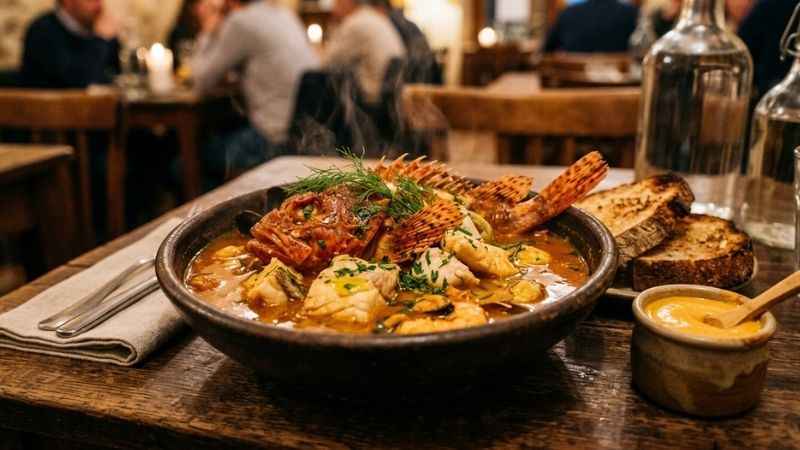
- Le Miramar: A historic waterfront institution on the Old Port known for authentic preparation.
- Chez Fonfon: A local favorite tucked into the quiet fishing port of Vallon des Auffes.
- La Petite Cigale: A well-rated neighborhood spot serving traditional seafood preparations.
- Villa M: A modern waterfront restaurant offering creative takes on classic coastal dishes.
Other local specialties include fresh seafood platters, sweet orange-flower biscuits called navettes, and anise-flavored pastis aperitifs. Noailles market eateries and small bakeries in Le Panier provide budget-friendly snacks for travelers on the go. Cours Julien houses trendy cocktail bars like Vise Versa for evening drinks.
Marseille Itineraries: 1, 2, and 3 Days
One day in Marseille requires a focused plan to see the absolute highlights without rushing. Mornings start at the Vieux-Port fish market before walking up through Le Panier alleys. Lunch near the old harbor fuels an afternoon visit to Notre-Dame de la Garde for sweeping city views. Evening walks along Corniche Kennedy lead to a quiet seafood dinner at Vallon des Auffes.
Two days add a deeper dive into coastal nature or island history. Day one covers city landmarks, Le Panier, and the MuCEM museum complex. Day two splits into either a morning boat tour of the Calanques or a ferry trip to Château d’If. Afternoon returns allow time to explore Palais Longchamp gardens and Cours Julien nightlife.
Three days unlock the full regional experience by adding a dedicated day trip to Cassis or deep park hiking trails. Visitors spend the third morning exploring hidden calanques or swimming at Prado Beaches. An afternoon trip to the Underwater Museum completes the coastal adventure before a final bouillabaisse dinner.
| Duration | Must-Do Highlights | Add If Time Permits | Skip If Rushed |
| 1 Day | Vieux-Port, Notre-Dame, MuCEM | Le Panier | Calanques, Château d’If |
| 2 Days | Above plus Calanques or Islands | Palais Longchamp | Cassis day trip |
| 3 Days | Above plus second day trip | Underwater Museum | None |
Free Things to Do in Marseille
Walking around the historic Vieux-Port and exploring the exterior of Notre-Dame de la Garde costs nothing. Self-guided walking tours through Le Panier reveal incredible street art murals and ancient stone stairways. Corniche Kennedy and Vallon des Auffes offer free scenic ocean views and perfect photography backdrops. Prado Beaches welcome sunbathers and swimmers without any entry fees throughout the year.
- Musée d’Histoire de Marseille: Always free admission for all permanent historical exhibits.
- Musée des Beaux-Arts: Free entry on the first Sunday of every month.
- MuCEM: Outdoor spaces are always free; exhibitions are free on the first Sunday of each month.
- Centre de la Vieille Charité: Free courtyard access and rotating gallery entry on the first Sunday.
Budget travelers save money by purchasing an RTM day pass for €5.20 to handle unlimited metro and bus rides. Grabbing fresh bakery items for a picnic at Palais Longchamp keeps food costs low. Visiting during shoulder seasons like May or September lowers accommodation prices significantly.
Marseille with Kids: Family-Friendly Activities
Families traveling with children find plenty of engaging activities beyond standard beach days. Préau des Accoules is a dedicated children’s museum that hosts interactive cultural workshops and creative exhibits. Prado Beaches feature safe, shallow swimming waters and modern playgrounds right on the sand. Palais Longchamp provides vast green lawns where kids can run safely away from city traffic.
- Boat Tours: Short two-to-three-hour coastal boat trips excite children with open-water views.
- Château d’If: Exploring the old stone fortress feels like an exciting pirate adventure.
- Parc Borély: A large urban park featuring shaded walking paths and a small animal area.
Strollers work well around the flat areas of the Vieux-Port and Palais Longchamp. Steep cobblestones in Le Panier and rugged calanque hiking trails make strollers impractical in those specific zones. Rainy days are easily managed by visiting the indoor history museum or local family cafes.
Safety in Marseille: What Tourists Need to Know
Marseille is generally safe for tourists who maintain standard urban situational awareness. The city records higher petty crime rates than some other French cities, but violent crime targeting visitors remains rare. Standard European travel precautions keep travelers secure throughout their stay.
| Neighborhood | Day Safety | Night Safety | Practical Notes |
| Vieux-Port | Safe | Safe | Watch belongings in crowds |
| Le Panier | Safe | Generally safe | Stick to well-lit main streets |
| Cours Julien | Safe | Safe | Lively and busy at night |
| Noailles | Safe | Use caution | Avoid late evening hours |
| La Castellane | Use caution | Avoid | High vigilance required |
Common scams include pickpocketing in crowded metro cars, open markets, and around the central harbor. Keeping bags zipped tightly and storing phones in front pockets prevents opportunistic theft. Travelers driving rental cars should always park in secure underground garages and avoid leaving valuable items visible on seats. Dialing 112 connects callers instantly to emergency services across the region.
Getting Around Marseille
The RTM public transport network includes two metro lines, three tram lines, and an extensive bus system. Single transit tickets cost €1.70, while a 24-hour unlimited pass costs €5.20 for easy city travel. Tickets are available at metro station kiosks, local tobacco shops, and through the official RTM mobile app.
Walking works best for exploring compact areas like the Vieux-Port, Le Panier, and Corniche Kennedy. Driving a personal car in the city center is not recommended because of heavy traffic and scarce parking. Cruise ship passengers arriving at La Joliette can walk fifteen minutes to the Old Port or take a short taxi ride for €10 to €15.
When to Visit Marseille
Spring from May to June and autumn from September to October offer the most comfortable weather for travel. Summer months bring intense heat, massive crowds, calanques fire closures, and inflated hotel prices. Winter brings mild temperatures with occasional rain, which works well for budget travelers seeking quiet museums.
Rainy Day Backup Plans
Rainy weather does not ruin a trip because Marseille offers fantastic indoor cultural spaces. The MuCEM and the Marseille History Museum provide hours of dry indoor exploration. La Vieille Charité offers covered courtyards and art exhibits protected from outdoor weather. Indoor shopping complexes like Les Terrasses du Port and Centre Bourse keep shoppers dry.
Frequently Asked Questions
Is Marseille worth visiting for tourists?
Marseille offers a unique blend of Mediterranean culture, historic landmarks, stunning natural scenery, and excellent seafood. It is France’s oldest city and has undergone a massive cultural renaissance. Standard urban precautions allow visitors to enjoy its many vibrant attractions safely.
What is Marseille best known for?
Marseille is best known for its historic Vieux-Port, the towering Notre-Dame de la Garde basilica, and dramatic coastal calanques. It is also famous for traditional bouillabaisse fish stew and as the literary setting for The Count of Monte Cristo.
Is 3 days enough for Marseille?
Three days is ideal for first-time visitors exploring the area. This timeframe allows two days for city highlights and neighborhoods, plus one full day for a calanques excursion or island boat trip.
Is Marseille safe for tourists in 2026?
Normal precautions make visiting Marseille safe for everyday travelers. While petty theft occurs in crowded tourist zones, violent crime against visitors is very rare. Travelers should avoid isolated northern districts and watch belongings closely.
What are the best calanques to visit from Marseille?
Calanque d’En-Vau offers the most stunning blue water for experienced hikers and boat tours. Calanque de Sormiou provides the easiest road access and works wonderfully for families and first-time visitors.
Where can I eat authentic bouillabaisse in Marseille?
Authentic bouillabaisse is served at Le Miramar, Chez Fonfon, and La Petite Cigale. Genuine portions cost between €50 and €80 per person and must feature traditional rascasse scorpionfish.
Are there free things to do in Marseille?
Exploring the Vieux-Port, walking around Notre-Dame de la Garde, and wandering through Le Panier cost nothing. Several public museums also offer completely free admission on the first Sunday of every month.
Can I visit the calanques without a car?
Public bus line 22 travels directly to Sormiou trailheads from the city center. Visitors also take daily boat tours or regional buses to reach stunning coastal walking paths without driving.
Plan Your Visit
- Book Tours Early: Reserve calanques boat tours and island ferries well in advance during summer months.
- Choose Accommodation: Stay near the Vieux-Port, Le Panier, or the 6th and 7th arrondissements for easy transit.
- Download Transit Apps: Install the RTM transport app to check real-time bus and metro schedules.
- Pack Smart: Bring comfortable walking shoes, a swimsuit, reef-safe sunscreen, and light layers for coastal breezes.
You May Also Like:
Things to Do in Madrid, Spain: The Complete 2026 Guide
Things to Do in Lucerne: The Complete 2026 Guide (1-Day, 2-Day & 3-Day Itineraries)