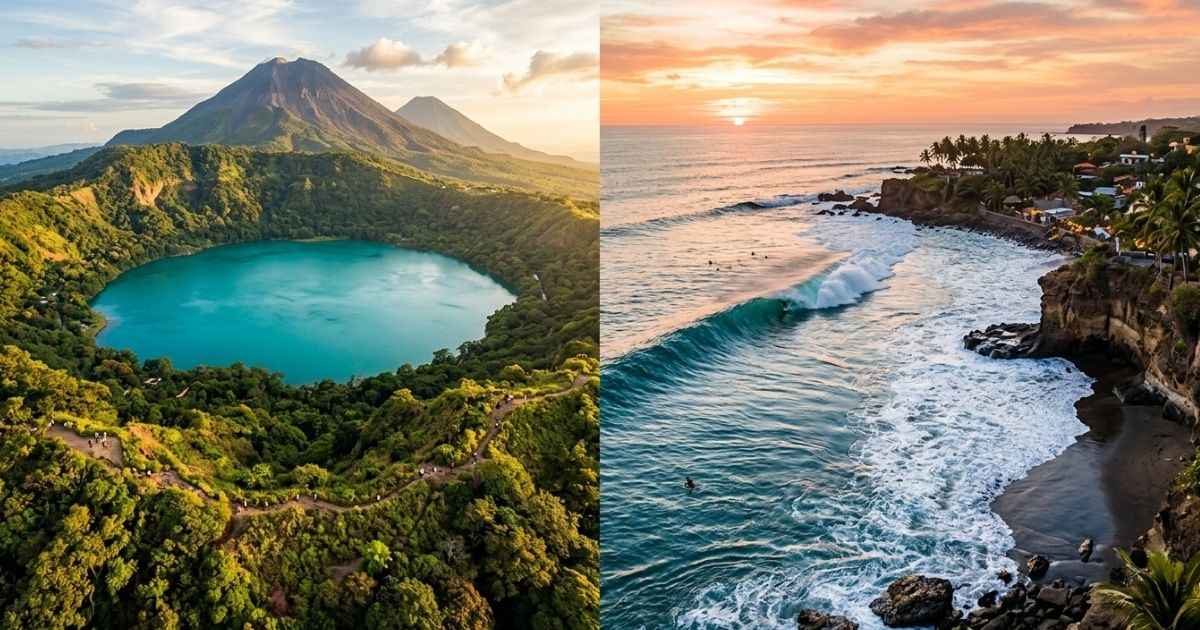
El Salvador has changed faster than any other country in Central America. Once known for high crime, it is now rated Level 1 by the US State Department. That is the same safety level as Japan and Switzerland. With a homicide rate of 1.3 per 100,000 residents in 2025 (the lowest in the Americas) and over 900 consecutive days without recorded homicides logged by May 2025, the country is experiencing a massive tourism boom.
about the same size as New Jersey, this country offers maximum variety in minimum distance. You can surf a world-class wave, hike an active volcano crater lake, explore ancient Mayan pyramids, and drive through mountain coffee towns all in the same week. This guide covers the best things to do in El Salvador, complete with realistic costs, safety facts, and practical travel tips for 2026.
Is El Salvador Safe for Tourists in 2026?
Safety is the number one question travelers ask before visiting. The reality on the ground has shifted completely over the last few years.
Current Safety Status
The US State Department maintains a Level 1 advisory for El Salvador, advising travelers to exercise normal precautions. The government’s ongoing state of exception, active since March 2022, has cleared the streets of gang activity. For tourists, this means high police visibility, peaceful towns, and zero curfews. You can walk through tourist areas, historic city centers, and beach towns day or night without fear.
Areas to Visit vs. Areas to Avoid
Major tourist destinations are very safe. You can visit El Tunco, El Zonte, Ruta de las Flores, Suchitoto, Santa Ana, and the historic center of San Salvador with confidence. Avoid non-tourist neighborhoods in major cities after dark, and do not ride public buses late at night. Always use registered Ubers or hotel shuttles when moving between cities after sunset.
Health and Medical Safety
El Salvador holds a World Health Organization malaria-free certification (awarded February 2021), making it the first Central American country to eliminate malaria. Belize received the same certification in 2023. Tap water is not safe for drinking, so stick to bottled or filtered water everywhere you go. Private hospitals in San Salvador offer modern care at affordable prices if you ever need medical attention.
Top 10 Things to Do in El Salvador
If you want a quick checklist of the absolute best highlights, start with these ten experiences:
- Hike Santa Ana Volcano to see its bright turquoise crater lake at 2,381 meters elevation.
- Surf the Pacific waves at El Tunco or El Zonte, starting with gentle beginner breaks at El Sunzal.
- Drive the Ruta de las Flores to explore five colonial mountain towns and weekend food festivals.
- Swim in Lago de Coatepeque, a massive volcanic crater lake surrounded by green slopes.
- Tour the Mayan ruins of Tazumal and Joya de Cerén, known as the Pompeii of the Americas.
- Wander through Suchitoto to see cobblestone streets, artisan markets, and Lake Suchitlán.
- Walk San Salvador’s historic center to visit El Rosario Church and the National Palace.
- Chase waterfalls at Tamanique or swim in the warm thermal pools at Salto de Malacatiupan.
- Eat fresh pupusas at a local roadside shop or visit the famous pupusa towns like Olocuilta.
- Summit Cerro Verde National Park for stunning views of neighboring volcanoes and cloud forests.
Volcano Adventures: Hiking El Salvador’s Fire Mountains
Volcanoes define the landscape of El Salvador. You can hike several major peaks in a single week, each offering a completely different view and climbing experience.
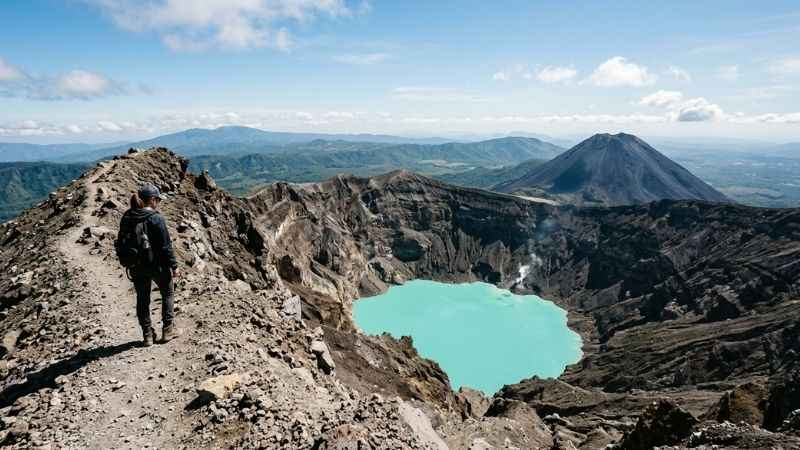
Santa Ana Volcano (Volcán de Ilamatepec)
Santa Ana is the highest volcano in the country, but the country’s highest point is Cerro El Pital at 2,730m. The main attraction is the glowing turquoise lake sitting inside the summit crater. The hike is moderately difficult, taking about two to three hours round trip along a well-maintained trail. Guided tours cost between $45 and $65, which includes your park entry fee and transportation from Santa Ana or San Salvador. Start your hike early in the morning to catch clear views before afternoon clouds roll in.
Cerro Verde National Park
Located right next to Santa Ana, Cerro Verde sits at 2,030 meters elevation. It features cool cloud forests, easy walking trails, and sweeping views of the Izalco Volcano and Lago de Coatepeque. Park entry costs $3 for foreigners ($1.50 for Salvadorans), with optional local guides charging around $30 to $40. It is a great spot for birdwatching and photography if you want a less crowded hike.
Boquerón National Park (San Salvador Volcano)
Just 30 minutes from downtown San Salvador, this park sits on the rim of the San Salvador volcano. You can walk a paved path to view the massive 1.5-kilometer-wide crater. The walk takes about 20 minutes, or you can hire a guide for a longer two-hour rim hike. Entry costs $5.00 plus $3.00 parking, and an Uber from the city center costs around $15 to $20.
Izalco Volcano
Known historically as the Lighthouse of the Pacific because passing ships used its glowing lava to navigate at night, Izalco is now dormant. The hike is moderately steep and cuts across dark volcanic ash fields. Guided tours cost $40 to $55, often combined with a trip to Cerro Verde.
Conchagua Volcano (Eastern El Salvador)
For adventurous travelers who make it to the eastern region, Conchagua offers panoramic views of the Gulf of Fonseca. From the top, you can see across the borders of Honduras and Nicaragua. Guided tours from San Miguel cost $50 to $70.
| Volcano | Elevation | Difficulty | Best For | Cost (Guided Tour) |
| Santa Ana | 2,381m | Moderate | Turquoise crater lake | $45 – $65 |
| Cerro Verde | 2,030m | Easy | Cloud forest & birdwatching | $30 – $40 |
| Boquerón | 1,893m | Easy | Quick half-day city escape | $15 – $25 (transport) |
| Izalco | 1,950m | Moderate-Hard | Historic volcanic landscapes | $40 – $55 |
| Conchagua | 1,813m | Moderate | Gulf of Fonseca views | $50 – $70 |
Surfing El Salvador: Pacific Coast Breaks for Every Level
El Salvador is a premier surf destination. The country features a warm Pacific coastline with consistent swells throughout the year. The primary surf hub is the Surf City corridor in the La Libertad Department, located just 40 minutes from the capital.
Surf City Corridor
The coastal highway connects dozens of world-class point breaks and beach breaks within a short drive. The best surf season runs from April to October when larger southern swells hit the coast. From November to March, the waves are smaller and much better for beginners.
Break-by-Break Guide
- El Sunzal is the best wave for beginners and longboarders. It offers a forgiving right-hand break with a long ride, safe swimming conditions, and plenty of surf schools on the sand.
- El Tunco is famous for its vibrant nightlife, beachfront hostels, and rocky black-sand beach. The surf break works well on small swells at mid tide, but the town itself is the main draw for travelers looking for food, drinks, and social energy.
- El Zonte, also known as Bitcoin Beach, offers a long, gentle point break with a wide takeoff zone. The village is quiet, family-friendly, and relaxed. Note that despite its nickname, Bitcoin adoption has slowed down significantly following the January 2025 amendment to the Bitcoin Law, which made acceptance voluntary and removed obligations for businesses and the government to accept it, and most businesses now prefer cash US Dollars or credit cards.
- Punta Roca in La Libertad is a world-class right-hand point break built for advanced surfers. It features powerful, hollow sections and long rides that attract professional surfers from around the globe. This break hosts major international competitions, including the WSL World Junior Championships.
- La Bocana is a powerful rivermouth break located just ten minutes from El Tunco. It handles large swells and works best for advanced surfers. K59 and K61 are remote reef breaks named after highway kilometer markers, offering consistent waves for intermediate and advanced surfers who want to escape the crowds.
Surf Lessons and Schools
Group surf lessons cost between $40 and $60, while private instruction ranges from $80 to $120. Board rentals cost $10 to $15 per day. Schools like Puro Surf in El Zonte and various camps in El Tunco provide certified instructors and video analysis for all skill levels.
Ruta de las Flores: Coffee, Colonial Towns & Waterfalls
The Ruta de las Flores is a 36-kilometer scenic mountain route winding through the western highlands from Sonsonate to Ahuachapán. Named for the wildflowers that bloom along the hillsides from November to February, the route connects five distinct colonial towns.
Town-by-Town Guide
- Juayúa is the first major stop, famous for its 18th-century church, colorful street murals, and a bustling Saturday food festival in the central square.
- Apaneca sits higher in the mountains and is known for cooler weather, nearby crater lakes like Laguna Verde, and adventure parks featuring zip lines and mountain slides.
- Salcoatitán is a small, quiet town known for traditional textile weaving, artisan workshops, and street-side cafes.
- Nahuizalco maintains strong indigenous Pipil roots. Visit the night market here to see traditional handicrafts.
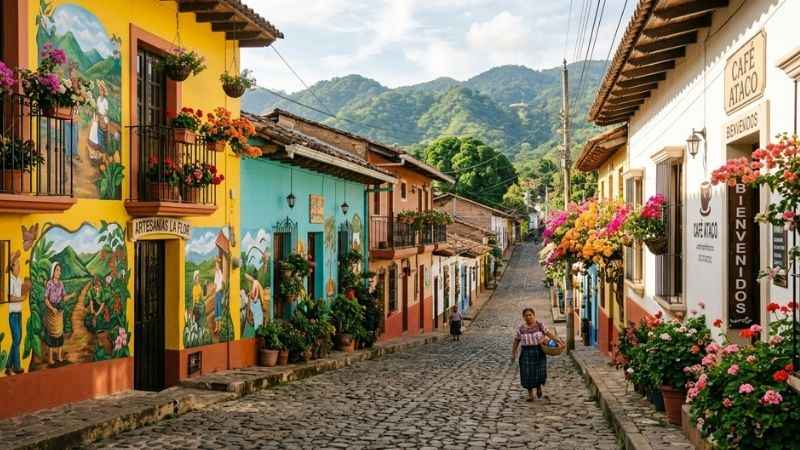
- Concepción de Ataco is the largest and most vibrant town on the route. It features steep cobblestone streets covered in murals, boutique coffee shops, weekend markets, and cozy guesthouses.
Coffee Plantation Tours
El Salvador produces some of the finest coffee beans in the world. You can tour working farms like Finca El Roble in Apaneca or Finca La Ilusión in Ataco. A standard tour costs $25 to $40 per person, taking you through coffee cultivation, wet and dry processing mills, and guided tastings. The best time to visit is during the harvest season between November and February.
Waterfalls Along the Route
The highlands hide dozens of cascading waterfalls. The Seven Waterfalls hike in Juayúa requires a local guide and takes two to three hours through river canyons. Tamanique Waterfalls, located closer to the coast, features seven jungle cascades with natural pools for swimming. Salto de Malacatiupan offers warm thermal waterfalls where you can swim in natural hot spring pools. Guided tours for these spots range from $35 to $80.
Getting to Ruta de las Flores
Driving from San Salvador takes about 1.5 to 2 hours. You can rent a car, hire an Uber for $60 to $80, or book an organized day tour for $50 to $70. Public buses run the route but require multiple transfers, making them a slow option for first-time visitors.
Mayan Ruins: Tazumal, Joya de Cerén & San Andrés
El Salvador holds a rich pre-Columbian history that is easy to explore without the massive crowds found at major archaeological sites in neighboring countries.
Tazumal (Chalchuapa)
Tazumal is the largest and most restored Mayan pyramid complex in the country. The main structure stands 24 meters tall across 13 levels. The site also features an ancient ball court and a museum filled with jade jewelry, pottery, and stone carvings. Admission costs $5 for foreign visitors.
Joya de Cerén
Often called the Pompeii of the Americas, this site offers a unique look at everyday ancient life. Around 600 AD, the Loma Caldera volcano erupted, burying an entire farming village in volcanic ash. Because the ash preserved organic materials, archaeologists uncovered remarkably intact homes, storehouses, sweat lodges, and agricultural fields. Admission is $10.
San Andrés
Located near Joya de Cerén, San Andrés served as a major political and economic capital during the Classic Period from 250 to 900 AD. The site includes an acropolis, pyramids, and a museum displaying artifacts recovered from the ruins. Admission costs $5. Mornings are the best time to visit all three ruins to beat the heat and avoid tour bus crowds.
San Salvador: Historic Center, Churches & Museums
San Salvador serves as the cultural and political hub of the country. The historic center has undergone a major revitalization, transforming into a clean, pedestrian-friendly area filled with architectural landmarks.
Historic Center Walking Tour
- El Rosario Church stands out with its brutalist concrete exterior and stunning interior stained glass windows that change colors throughout the day. Entry is free, and morning light provides the best photographs.
- The National Palace features grand neoclassical rooms and former presidential offices. Guided tours cost $5.
- The Metropolitan Cathedral holds the tomb of Archbishop Óscar Romero, who was assassinated in 1980 and canonized by Pope Francis on October 14, 2018.
- The National Library, known as BINAES, is a modern glass structure with extended 24-hour access, recognized as the largest library in Central America.
Museums and Markets
The Museum of Art of El Salvador, known as MARTE, displays contemporary Latin American art for a $5 entry fee. The National Anthropology Museum exhibits pre-Columbian artifacts and Mayan history. For shopping, the National Handicraft Market offers textiles, ceramics, and leather goods where bargaining is welcome.
Nightlife and Dining
Zona Rosa and Santa Elena are upscale neighborhoods featuring craft cocktail bars, international restaurants, and boutique hotels. For an evening activity, join a guided night bike ride through the historic center with local cycling groups to experience the illuminated plazas safely.
Beaches & Coastal Towns Beyond Surfing
Beyond the surf hubs of El Tunco and El Zonte, El Salvador’s coastline offers diverse beach towns for relaxation, swimming, and family trips.
- Playa El Espino features wide sandy shores and calm waters, making it ideal for families and non-surfers.
- Costa del Sol offers luxury beachfront resorts, calm estuary boat tours, and newly renovated public recreational parks.
- Playa El Majahual is a popular weekend destination for locals looking for affordable beach food and calm swimming areas.
- Further east, beaches like Playa Las Flores and Playa El Icacal offer remote eco-tourism experiences near mangrove estuaries.
Unique & Off-the-Beaten-Path Experiences
If you want to step away from standard tourist trails, El Salvador offers several unique activities that highlight local history and nature.
- The El Mozote Memorial in the eastern highlands preserves the tragic history of the 1981 civil war massacre through a museum and memorial garden managed by survivors.
- Isla Méndez in the Gulf of Fonseca offers boat tours through dense mangrove forests where you can spot frigatebirds, herons, and wild sea life.
- Parque Nacional El Imposible is the largest national park in the country, protecting a rugged mountain rainforest with challenging hiking trails and hundreds of bird species.
- In Suchitoto, you can take a wooden boat tour on Lake Suchitlán to visit bird islands and watch local fishermen cast their nets.
Sample Itineraries: 3, 5, and 7 Days in El Salvador
Planning your schedule depends on how much time you have. Here are three optimized itineraries to help you structure your trip.
3-Day El Salvador Itinerary (First-Time Visitors)
- Day 1: Arrive in San Salvador, explore the historic center (El Rosario Church, National Palace, Metropolitan Cathedral), and stay overnight in San Salvador or El Tunco.
- Day 2: Take a morning hike up Santa Ana Volcano, swim in Lago de Coatepeque in the afternoon, and sleep near Santa Ana or Ruta de las Flores.
- Day 3: Drive the Ruta de las Flores, visit Juayúa and Ataco, take a coffee farm tour, and return to San Salvador for departure.
5-Day El Salvador Itinerary (Balanced Experience)
- Day 1: Arrive in San Salvador, tour the historic center, and enjoy dinner in Zona Rosa.
- Day 2: Hike Santa Ana Volcano, visit Lago de Coatepeque, and travel to Concepción de Ataco for an overnight stay.
- Day 3: Explore Ruta de las Flores waterfalls and markets, then transfer to the coast for an evening in El Tunco.
- Day 4: Surf at El Sunzal or take a day trip to Tamanique Waterfalls for cliff jumping and swimming.
- Day 5: Visit Suchitoto colonial town and Lake Suchitlán before heading to the airport for departure.
7-Day El Salvador Itinerary (Comprehensive Adventure)
- Day 1: Arrive in San Salvador, check into your hotel, and walk the revitalized downtown plazas.
- Day 2: Explore Tazumal and Joya de Cerén Mayan ruins, then head to Santa Ana for the night.
- Day 3: Hike Santa Ana Volcano, relax by Lago de Coatepeque, and drive up to Ruta de las Flores.
- Day 4: Spend the full day exploring coffee towns, waterfalls, and local food markets on the Ruta de las Flores.
- Day 5: Transfer to El Tunco, rent a surfboard, and enjoy beachfront dining at sunset.
- Day 6: Take a day trip to Boquerón National Park and join a night bike tour in San Salvador.
- Day 7: Relax on the beach or shop for souvenirs before your evening departure.
Practical Information: Costs, Transportation & 2026 Events
Currency and Budget
El Salvador uses the US Dollar as its official currency. You do not need to exchange money if you are arriving from the United States. ATMs are widely available in cities and charge a flat fee of $5 to $7. Credit cards work well at hotels, upscale restaurants, and tour companies, but you must carry cash for small roadside comedores, local buses, and artisan markets.
Budget travelers can easily get by on $40 to $60 per day by staying in hostels, eating street food, and using public buses. Mid-range travelers spend $80 to $120 per day for private hotel rooms, restaurant meals, Ubers, and guided tours. Luxury travelers can expect to spend $150 to $250 or more per day. A single $100 bill covers about two days of budget travel or one full day of mid-range activities.
Transportation Options
Renting a car costs $40 to $70 per day and gives you the most freedom, though mountain roads require careful driving. Uber operates reliably in San Salvador, Santa Ana, and Suchitoto, but is unavailable in coastal towns like El Tunco where you must rely on local taxis or hotel shuttles. Shared shuttles cost $15 to $25 between major tourist hubs. Public buses cost $1 to $3 per ride and cover the entire country, but they are slow, crowded, and not recommended for first-time visitors or nighttime travel.
Visa and Entry Requirements
Citizens of the United States, Canada, European Union, United Kingdom, and Australia do not need a visa for tourist stays up to 90 days. Your passport must remain valid for at least six months past your entry date. The tourist entry card requirement was abolished in 2024, though some sources indicate a $12 Tourist Card may still be required for non-CA-4 visitors—verify current requirements before travel.
Best Time to Visit
The dry season runs from December to April, offering clear skies, warm weather, and ideal conditions for hiking volcanoes and exploring cities. The rainy season runs from May to November, bringing afternoon tropical showers, lush green landscapes, lower hotel prices, and larger surf swells along the coast.
2026 Events Calendar
- Fiestas Agostinas (August 1-6): San Salvador’s biggest annual festival featuring street parades, concerts, fireworks, and amusement parks.
- WSL World Junior Surfing Championships (Dates TBD): International surf competition held at Punta Roca.
- Independence Day (September 15): Nationwide civic parades, traditional food stalls, and evening fireworks.
- Festival de Pupusas: Held in Suchitoto, celebrating the national dish with eating competitions and live music.
Frequently Asked Questions (FAQ)
Is El Salvador safe for tourists in 2026?
Yes. The US State Department rates El Salvador Level 1, matching countries like Japan and Switzerland. The homicide rate has dropped to 1.3 per 100,000 residents in 2025 (the lowest in the Americas) and over 900 consecutive days without recorded homicides logged by May 2025. Tourist regions like El Tunco, Ruta de las Flores, Suchitoto, and Santa Ana are safe when you exercise normal travel precautions.
What currency is used in El Salvador?
El Salvador uses the US Dollar. No currency exchange is necessary for US visitors. ATMs are easy to find in urban areas, and credit cards are widely accepted, though cash is required for small local eateries and markets.
Do I need a visa to visit El Salvador?
No visa is required for passport holders from the US, Canada, EU, UK, and Australia for stays under 90 days. Your passport must be valid for six months beyond your arrival date.
What is the best time to visit El Salvador?
The dry season between December and April provides the best weather for outdoor hiking and sightseeing. Surfers prefer the larger swells from April to October. Shoulder months like November and May offer great weather with fewer crowds.
How many days do I need in El Salvador?
Three days covers the major highlights like Santa Ana Volcano and the capital. Five to seven days allows a balanced trip including surfing, Mayan ruins, and coffee towns. Ten days lets you explore the eastern region.
Is Bitcoin accepted in El Salvador?
Bitcoin adoption has slowed down significantly following the January 2025 amendment to the Bitcoin Law, which made acceptance voluntary and removed obligations for businesses and the government to accept it. Acceptance is rare outside a few isolated businesses in El Zonte. Bring US Dollars or credit cards for your trip.
Is tap water safe to drink in El Salvador?
Tap water is not safe for drinking. Stick to bottled or filtered water everywhere you go. Ice in major restaurants is normally purified, but use bottled water for brushing your teeth if you have a sensitive stomach.
What are the must-try foods in El Salvador?
Pupusas are the national dish, consisting of thick corn tortillas stuffed with cheese, beans, or pork. Other popular foods include tamales, atol shuco corn drink, fried yuca, and fresh ceviche. The town of Olocuilta is famous for making the best pupusas.
Can I visit El Salvador with kids?
Yes. El Salvador offers family-friendly beaches like Costa del Sol, easy crater walks at Boquerón, boat tours on Lake Suchitlán, and secure resort areas. Stick to guided tours and avoid remote areas after dark.
How much does a trip to El Salvador cost?
Budget travelers spend $40 to $60 daily, while mid-range travelers average $80 to $120 daily. A standard five-day trip excluding international flights costs approximately $1,200 to $1,800 per person.
Final Thoughts
El Salvador combines world-class surf breaks, smoking volcano craters, ancient Mayan history, and vibrant mountain coffee towns into one compact destination. With its dramatic safety transformation and affordable pricing, it stands out as Central America’s most exciting destination for 2026. Plan your trip around local events, pack your bags, and experience this vibrant country before the rest of the world catches on.
You May Also Like:
Things to Do in Panama City, Panama: Attractions, Nature, Food, and Itineraries
25 Best Things to Do in Antigua Guatemala