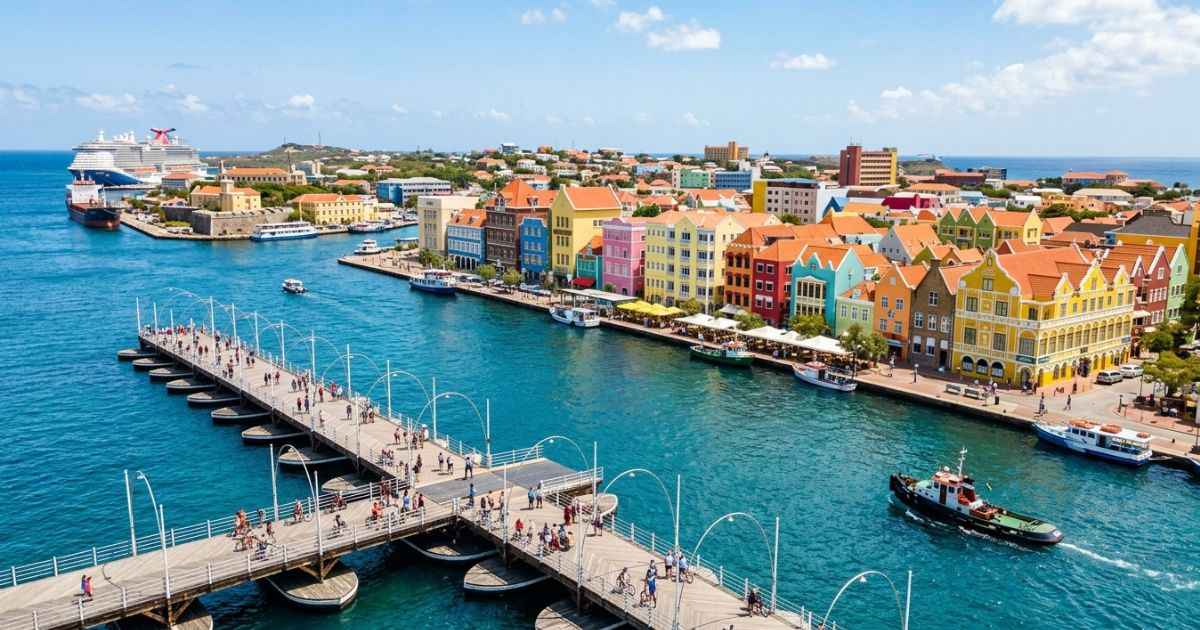
Curaçao is a vibrant Caribbean island widely associated with colorful Dutch-colonial architecture in Willemstad, sheltered beaches, rugged coastline, diving, and multicultural heritage. If you are planning your itinerary and looking for the best things to do in Curaçao, this guide combines rich Afro-Curaçaoan heritage with outdoor adventures like snorkeling with marine life and exploring protected national parks. This practical resource helps you choose the right experiences for your travel style, budget, and time.
The Five Essential Curaçao Experiences
If you want to know what to do in Curaçao during a typical visit, five core activities stand out. These highlights cover the main regions and diverse landscapes of the island.
- Walk historic Willemstad: Explore the colorful waterfront buildings and cross the floating bridge.
- Swim at a west-coast beach: Spend a sunny afternoon relaxing in a sheltered cove.
- Visit Shete Boka National Park: Watch powerful ocean waves crash into sea caves.
- Take a Klein Curaçao boat trip: Sail out to an uninhabited offshore island for a long white-sand beach.
- Explore local culture: Learn about local history and taste the island’s famous liqueur.
| Experience | Time Needed | Region | Cost Level | Best For |
| Willemstad Walking | Half Day | Willemstad | Free | First-time visitors |
| West-Coast Beach | Half Day | Western/Southwestern Curaçao | Low to Medium | Swimmers and families |
| Shete Boka Park | Flexible | North Coast | Unverified | Nature lovers and photographers |
| Klein Curaçao Trip | Full Day | Offshore | High | Boat and beach fans |
| Cultural Tour | 2 Hours | Willemstad | Low | History enthusiasts |
Best Things to Do in Willemstad
Willemstad is the capital and chief city of Curaçao. The Historic Area of Willemstad, including Punda and Otrobanda around Sint Anna Bay, is a UNESCO World Heritage Site.
Walk Punda and see Handelskade
Punda is one of Willemstad’s principal historic districts. Here you will find the famous Handelskade street, lined with brightly painted Dutch colonial buildings. Early morning offers the best lighting for photography before the midday sun gets too hot. A relaxed self-guided walk through these streets takes about one to two hours, excluding museums, shopping, meals, and waiting time.
Cross the Queen Emma Pontoon Bridge
The Queen Emma Bridge is a floating pontoon bridge that is moved aside by motors when vessels need to enter or leave the harbor. When the bridge opens, pedestrians use the free ponchi ferry until the bridge returns.
Explore Otrobanda and Rif Fort
Cross over to Otrobanda to experience historic streets filled with street art. Visit the historic Rif Fort at the harbor entrance. This area offers views across the water back toward the Punda storefronts.
Visit Pietermaai after sunset
Pietermaai is a historic district southeast/east of central Punda, known for restaurants, accommodations, and nightlife. Restored old buildings now serve as boutique hotels, cozy cafés, and open-air cocktail bars. After sunset, string lights illuminate the streets, creating an atmosphere for dinner and evening drinks.
Add a museum or heritage stop
Learn about the island’s deep heritage at local cultural sites. The Kura Hulanda Museum is associated with exhibitions on African heritage, Caribbean history, and the transatlantic slave trade. You can also visit the Mikvé Israel-Emanuel Synagogue, which is the oldest synagogue in continuous use in the Western Hemisphere.
Best Beaches in Curaçao by Experience
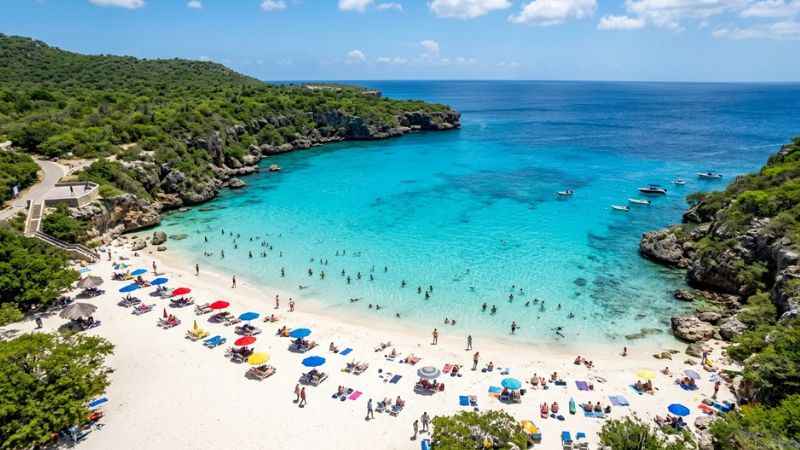
Curaçao’s coastline features limestone cliffs alongside sheltered coves. Choosing the right beach depends on what kind of day you want to have.
| Beach | Best for | Access | Facilities | Snorkeling | Cost Notes |
| Grote Knip | Scenic swimming | Drive required | Limited | Good in suitable conditions | Free entry according to the current official tourism listing |
| Playa Lagun | Small cove and snorkeling | Drive required | Limited | Known as a snorkeling site, subject to water conditions | Verify facilities |
| Playa Piskado | Turtle viewing | Drive required | Basic | Known for frequent sea-turtle sightings; sightings are not guaranteed | Do not touch turtles |
| Cas Abao | Facilities and relaxation | Drive required | Bar, restaurant, showers, massage facility, and shade structures | Good | Verify current fee |
| Playa Porto Mari | Beach day and snorkeling | Drive required | Strong | Good | Verify current fee |
| Mambo Beach | Beach clubs and nightlife | One of the more accessible developed beach areas from Willemstad | Extensive | Variable | Commercial area |
| Jan Thiel Beach | Dining and organized activities | Drive required | Extensive | Variable | Commercial area |
How to choose a Curaçao beach
Choose west-coast coves for scenic swimming and shore snorkeling. Choose Mambo or Jan Thiel if you want beachfront restaurants, lounge chairs, and easy parking. Public beaches can reduce beach-entry costs, although transportation and amenities may still cost extra. Always check entry conditions, shade options, and wind levels before driving across the island.
Snorkeling, Diving, and Water Activities
Several Curaçao sites offer shore snorkeling or shore diving, subject to local conditions and site-specific safety guidance.
Best shore-snorkeling locations
You can swim right off the sand at several popular locations. Playa Lagun offers clear water flanked by steep rocky cliffs. Playa Kalki provides underwater exploration. You can also view marine life at the Tugboat shipwreck site.
Responsible turtle encounters
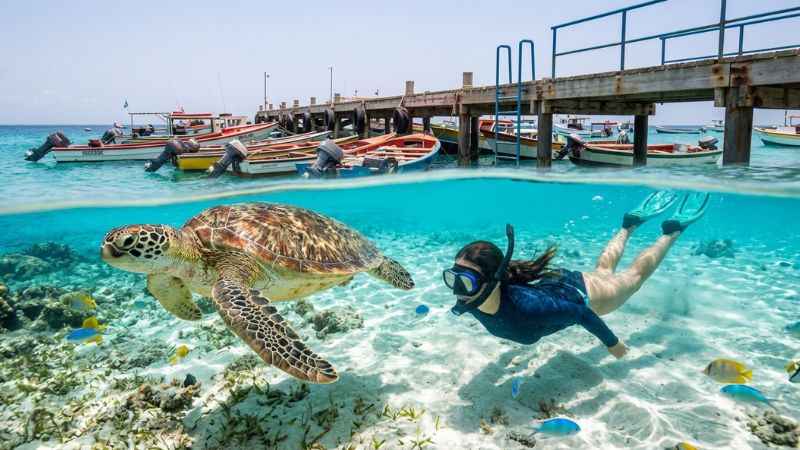
Playa Piskado, also known as Playa Grandi, is known for frequent sea-turtle sightings near the local fishing pier; sightings are not guaranteed. Keep a respectful distance from all marine life. Never touch, chase, feed, or block sea turtles while they swim or breathe.
Other water activities
The southwestern/leeward coast is often more sheltered than the exposed north coast, but conditions vary and must be assessed locally. Catamaran cruises sail along the coast toward secluded bays. You can also book guided kayaking or paddleboarding tours.
Curaçao’s Nature and National Parks
The northern and western parts of the island offer rugged landscapes, dry forests, and protected natural parks.
Shete Boka National Park
Shete Boka is a rugged north-coast park with sea caves, inlets, and blowholes, including Boka Tabla. Visitors can view the Boka Tabla wave cave from designated areas. Shete Boka is primarily for viewing rugged coastline, caves, and blowholes, and visitors should not swim in the exposed wave areas. Bring sturdy walking shoes, sunscreen, and plenty of water for the sunny trails.
Christoffel National Park and Mount Christoffel
This protected park contains Curaçao’s highest point. Mount Christoffel is the island’s highest point at approximately 372 meters. The summit can provide broad views in clear conditions, subject to trail access and weather. Hiking to the summit requires an early morning start to beat the heavy midday heat. Visitors can enjoy lower driving trails and historical sites.
Hato Caves
The Hato Caves feature limestone formations formed over long geological periods. Guided walking tours lead visitors through illuminated caverns while explaining local geological history. This attraction offers an indoor environment during the warmest parts of the day.
Flamingo viewpoints and salt flats
Flamingos may be seen around the Jan Kok salt flats, depending on conditions. Viewing conditions vary depending on the water levels and the distance of the birds from the road. Watch these animals quietly from designated pull-off areas without disturbing them.
Klein Curaçao: Is the Day Trip Worth It?
Klein Curaçao is a small, uninhabited island southeast of Curaçao, approximately 10 km away geographically; boat travel time varies, commonly around 90 minutes to two hours each way.
| Worth considering if… | Consider skipping if… |
| You want a full boat-and-beach day | You have only one day on the main island |
| You enjoy open-water travel | You are prone to seasickness |
| You want a remote-island setting | You prefer culture, hiking, or exploring |
| You have stable weather forecasts | Forecasts show rough sea conditions |
Visitors generally reach Klein Curaçao by organized or private boat. You can see the historic lighthouse on the island, subject to access and safety conditions, or observe marine life in the shallow bay. Compare tour operators carefully based on boat size, included amenities, and cancellation policies.
Local Culture, Food, and History
Curaçao’s culture reflects Dutch, African, Caribbean, Iberian, Jewish, and Latin American influences.
Learn Curaçao’s layered history
Afro-Curaçaoan heritage has significantly influenced music, language, food, religion, and cultural life. Papiamentu is a Creole language influenced primarily by Portuguese and Spanish, with Dutch, African, and other Caribbean influences. Curaçao’s official languages are Papiamentu, Dutch, and English. Historic plantation houses are scattered across the countryside.
Visit Landhuis Chobolobo
Landhuis Chobolobo is home to Senior & Co.’s “Genuine Curaçao Liqueur” distillery. Here you can learn how Senior & Co.’s Genuine Curaçao Liqueur is distilled from the dried peels of the local Laraha orange. Tours include historical exhibits and cocktail tastings.
Try local food and music
Sample local dishes like stoba, a slow-cooked meat stew, and fresh fish at neighborhood restaurants.
Best Curaçao Activities by Traveler Type
- First-time visitors: Willemstad, one west-coast beach, and Shete Boka.
- Couples: Pietermaai dinners, sunset beach walks, and a Klein Curaçao day trip.
- Families: Several sheltered bays can be suitable for families, but check local conditions and supervise children, interactive nature parks, and short walking tours.
- Divers and snorkelers: Playa Lagun, Porto Mari, Kalki, and shore-diving sites.
- Cruise passengers: Cruise passengers should choose activities based on the ship’s docking location, all-aboard time, traffic, and excursion duration.
- Budget travelers: Public beaches, Willemstad walking route, and free coastal viewpoints.
- Visitors without a car: Willemstad-based stays, organized boat excursions, and taxi transfers.
- Rainy-day travelers: Museums, the liqueur distillery, indoor cafés, and shopping malls.
How Many Days Do You Need in Curaçao?
- One day: Explore Willemstad in the morning and relax at a nearby beach in the afternoon.
- Three days: Spend one day in Willemstad, one day exploring west-coast beaches, and one day visiting north-coast national parks.
- Five to seven days: Five to seven days gives many visitors enough time to combine Willemstad, beaches, parks, and an offshore excursion without rushing.
Practical Planning: Cars, Costs, and Timing
Do you need a rental car?
A rental car is often the most convenient option for independent exploration beyond Willemstad. You can manage without a car if you stay in Willemstad and rely on organized tour operators for your excursions. Offline maps can help, but visitors should confirm routes locally and allow extra time.
Budget categories
- Free: Walking around Willemstad, visiting public beaches, and viewing the salt flats.
- Low-cost: Exploring museums, entering national parks, trying local street food, and self-guided beach days.
- Higher-cost: Booking Klein Curaçao boat trips, private catamaran sails, scuba diving packages, and premium beach club entry.
How to group activities efficiently
- Willemstad day: Walk Punda, cross the floating bridge, and explore Otrobanda.
- West-coast beach day: Visit Grote Knip, Playa Lagun, and Playa Piskado.
- North-coast nature day: Tour Shete Boka National Park and the Hato Caves.
- Willemstad and southeastern beach day: Relax at Mambo Beach and dine in Pietermaai.
Mistakes to Avoid in Curaçao
- Do not treat the entire island as walkable from Willemstad.
- Do not assume every beach has reliable shade, restrooms, or food vendors.
- Do not enter the exposed sea caves, blowhole areas, or rough north-coast water; follow park signage and staff instructions.
- Do not touch, chase, or feed marine life while snorkeling.
- Do not plan too many distant beaches into a single afternoon.
- Do not rely on outdated opening hours or unverified ticket prices.
- Do not book an open-water boat trip without checking bad-weather cancellation terms.
- Do not forget to pack plenty of water, sun-protective clothing, and sturdy walking shoes.
FAQ: Things to Do in Curaçao
What is the number-one must-do in Curaçao?
Walking through Willemstad is widely regarded as one of Curaçao’s essential experiences.
What is Curaçao best known for?
Curaçao is widely associated with colorful Dutch-colonial architecture in Willemstad, sheltered beaches, rugged coastline, diving, and multicultural heritage.
How many days are enough for Curaçao?
Five to seven days gives many visitors enough time to combine Willemstad, beaches, parks, and an offshore excursion without rushing.
Is Curaçao better for beaches or sightseeing?
Curaçao offers both beach and sightseeing options, allowing travelers to combine them according to preference.
Is Klein Curaçao worth the trip?
Klein Curaçao is worth the boat trip if you enjoy open-water sailing, long white-sand beaches, and remote lighthouse settings, provided sea conditions are calm.
Can you visit Curaçao without renting a car?
A rental car is often the most flexible option for reaching dispersed beaches and parks, but organized tours or private transfers are alternatives.
What are the best free things to do in Curaçao?
Walking through Punda and Otrobanda, crossing the Queen Emma Bridge, and visiting public beaches or natural salt-flat viewpoints are all wonderful free activities.
What are the best things to do in Curaçao with kids?
Families enjoy sheltered swimming beaches like Playa Porto Mari, interactive nature displays, and exploring underground formations at the Hato Caves.
You May Also Like:
Things to Do in San Juan, Puerto Rico: Best Attractions, Beaches, Food, and Day Trips
Things to Do in St. Thomas: The Complete 2026 Guide to Beaches, Tours & Hidden Gems