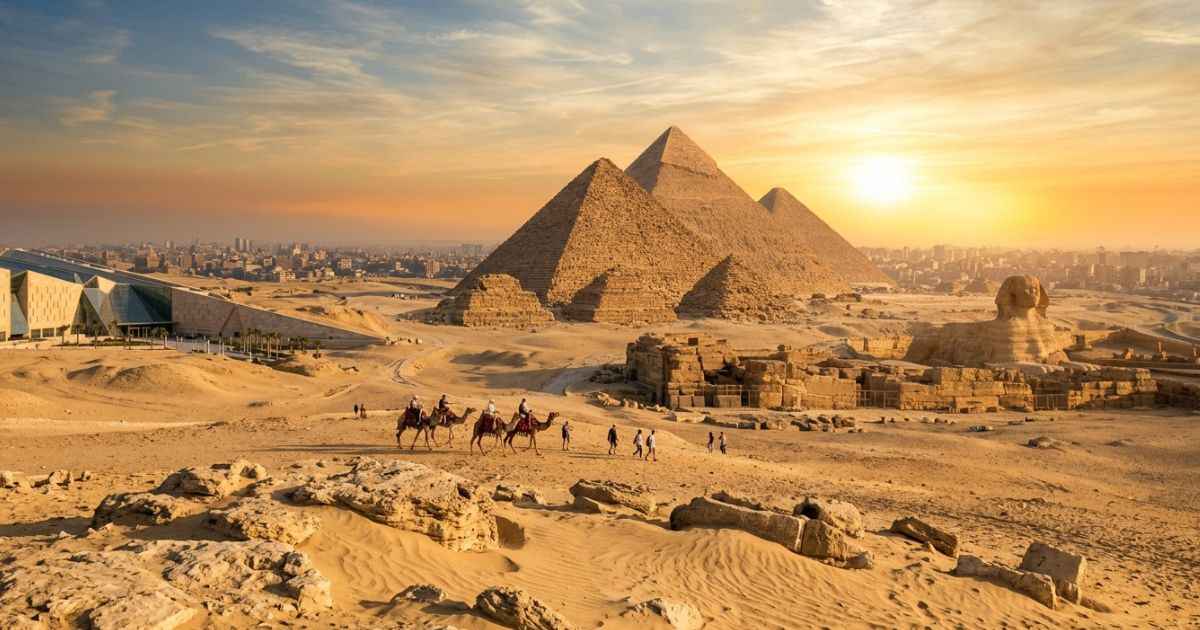
Cairo is a city where ancient history collides with relentless, high-energy modern life. From the silent majesty of the Giza Plateau to the chaotic, spice-scented alleyways of medieval bazaars, Egypt’s capital is an unforgettable destination. With the landmark full opening of the Grand Egyptian Museum (GEM) on November 1, 2025, Cairo’s tourism landscape has entered an exciting new era, making 2026 the absolute best time to explore the city. Whether you are chasing pharaonic treasures, navigating Islamic architecture, or sipping tea by the Nile, this comprehensive, practical guide provides everything you need to experience Cairo like an expert.
Planning Your Cairo Visit
- Best Time to Visit: October through April offers warm days and cool desert evenings (20–25°C / 68–77°F). Avoid the scorching summer months (June–August) when temperatures routinely exceed 40°C (104°F).
- How Many Days: 3 to 4 days is the sweet spot for a first-time visitor to see the highlights without burning out.
- Visa Requirements: E-visas are available online for most nationalities, costing $30 USD for single-entry and $65 USD for multiple-entry. Most nationalities can also obtain a visa on arrival at Cairo International Airport for $30 USD. Apply at least 7 days before departure via the official visa2egypt.gov.eg portal.
- Currency: Egyptian pounds (EGP). Cash remains king, especially in souks and small eateries, though cards are widely accepted at hotels and upscale venues.
- Safety Overview: Cairo is generally safe for tourists, backed by a visible tourist police presence. Petty theft and scams are the primary risks, not violent crime.
- Average Daily Cost: Ranges from $30–$50 USD for budget travelers, $60–$100 USD for mid-range explorers, and $150+ USD for luxury experiences.
The Top 10 Things to Do in Cairo
1. Explore the Giza Pyramids and Sphinx
- What: The last remaining Ancient Wonder of the World, featuring the three main pyramids of Khufu, Khafre, and Menkaure, guarded by the Great Sphinx.
- Why Visit: It is the ultimate bucket-list experience with unparalleled historical weight.
- Time Needed: 3 to 4 hours minimum.
- Cost: Giza Plateau general entry is 700 EGP for foreign adults, plus optional interior tickets (Great Pyramid / Khufu interior is an additional 1,000–1,500 EGP, Khafre is 280 EGP, and Menkaure is 200 EGP).
- Tips: Operating hours vary by season (7:00 AM–7:00 PM in summer from April to September, and 8:00 AM–5:00 PM in winter from October to March); adjust your morning arrival accordingly to beat the heat and tour groups. Politely decline unsolicited “help” or camel guides who quote misleading prices, and bring robust sun protection.
2. Visit the Grand Egyptian Museum (GEM)
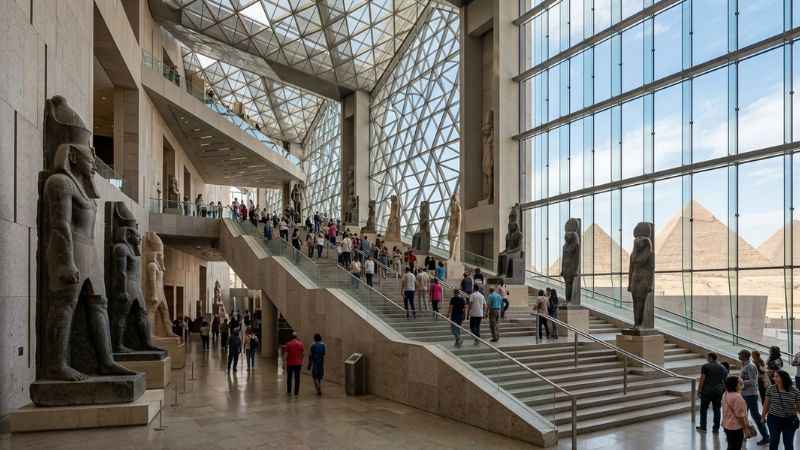
- What: The world’s largest archaeological museum dedicated to a single civilization, housing the complete Tutankhamun collection (all 5,000 objects), alongside tens of thousands of other artifacts.
- Why Visit: Following its full opening on November 1, 2025, the GEM offers a state-of-the-art, comprehensive view of ancient Egypt right next to the Giza Plateau.
- Time Needed: 3 to 4 hours minimum.
- Cost: Standard admission ticket required.
- Tips: Book tickets online in advance as time slots sell out quickly. Wear comfortable shoes, as the galleries and grand staircase span massive footprints.
3. Wander Through Khan el-Khalili Bazaar
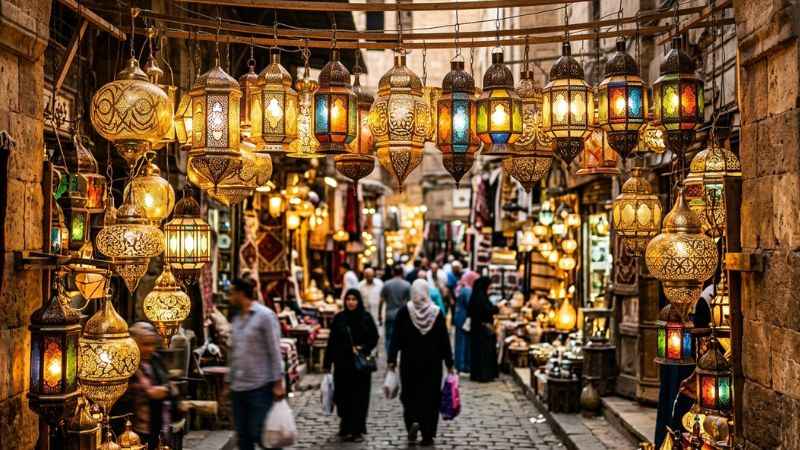
- What: A sprawling medieval market founded between 1382 and 1389 under Mamluk Sultan Barquq, filled with lanterns, spices, textiles, and handmade jewelry.
- Why Visit: It offers an authentic, sensory-rich Cairo atmosphere steeped in history.
- Time Needed: 2 to 3 hours.
- Cost: Free to enter; budget for purchases.
- Tips: Bargain aggressively—start at 30% to 40% of the initial quoted price. Carry small EGP notes, wear closed-toe shoes, and stop by the historic El Fishawy café for traditional mint tea.
4. Discover Coptic Cairo
- What: An ancient Christian enclave featuring the 5th-century Hanging Church, the Coptic Museum, and the historic Ben Ezra Synagogue.
- Why Visit: It houses some of the oldest Christian structures in the world, providing a tranquil, layered contrast to Islamic Cairo.
- Time Needed: 2 to 3 hours.
- Cost: Free entry to the Hanging Church, Ben Ezra Synagogue, and Abu Serga Church; a paid admission fee applies for the Coptic Museum.
- Tips: Visit on weekday mornings to avoid crowds. Dress modestly, covering shoulders and knees.
5. Walk Al-Muizz Street (Islamic Cairo)
- What: A UNESCO World Heritage open-air museum boasting one of the world’s densest concentrations of medieval Islamic architecture, stretching from Bab al-Futuh to Bab Zuweila.
- Why Visit: You can walk past breathtaking 10th- to 19th-century mosques, madrasas, and palaces completely free of charge.
- Time Needed: 2 to 3 hours.
- Cost: Free to walk; small fees if entering specific historical monuments.
- Tips: Wear supportive shoes for the uneven cobblestones, and climb the minaret at Bab Zuweila if open for panoramic city views.
6. Tour the Citadel of Saladin and Mosque of Muhammad Ali
- What: A 12th-century stone fortress housing the striking 19th-century alabaster Mosque of Muhammad Ali.
- Why Visit: It commands the finest panoramic views across Cairo’s sprawling skyline.
- Time Needed: 2 hours.
- Cost: Standard Citadel admission ticket costs 550 EGP for foreign adults (275 EGP for foreign students with an ISIC card).
- Tips: Visit in the late afternoon for golden hour light and sunset views over the city. Remember to dress modestly and remove your shoes before entering the mosque.
7. See the Royal Mummies at the National Museum of Egyptian Civilization (NMEC)
- What: A modern cultural institution in Old Cairo where Egypt’s royal mummies rest in climate-controlled, respectful splendor.
- Why Visit: It is the exclusive home of the relocated royal mummies (moved here in 2021), displayed alongside an engaging, chronological narrative of Egyptian civilization.
- Time Needed: 2 to 3 hours.
- Cost: General admission plus a separate 180 EGP supplement ticket required for the Royal Mummies Hall.
- Tips: Combine this with a morning trip to Coptic Cairo, as both are located in Old Cairo. Note that photography is strictly prohibited inside the mummy gallery.
8. Take a Felucca Ride on the Nile at Sunset
- What: A peaceful sail aboard a traditional wooden Egyptian sailboat along the world’s longest river.
- Why Visit: It provides a tranquil escape from Cairo’s chaotic traffic and an iconic perspective of the skyline.
- Time Needed: 1 to 2 hours.
- Cost: Negotiable hourly rate.
- Tips: Agree on the price, route, and duration with the captain before stepping aboard. Bring a light jacket, as breezes on the water can turn cool after sunset.
9. Visit the Egyptian Museum in Tahrir Square
- What: The historic neoclassical palace of antiquities opened on November 15, 1902, in downtown Cairo.
- Why Visit: Even though the royal mummies moved to NMEC and the Tutankhamun collection transferred to the GEM, this architectural icon retains roughly 120,000 artifacts, a distinct old-world charm, and fewer crowds.
- Time Needed: 2 to 3 hours.
- Cost: Standard museum entry.
- Tips: Focus on sections that highlight the museum’s historic architecture and artifacts not transferred to Giza.
10. Watch Sunset from Al-Azhar Park
- What: A beautifully landscaped hilltop public park overlooking the historic rooftops of Islamic Cairo.
- Why Visit: It offers unmatched green space, clean air, and the best sunset photography vantage point in the city.
- Time Needed: 1 to 2 hours.
- Cost: Requires an entrance ticket.
- Tips: Arrive an hour before sunset to grab a table at the park’s terrace restaurant for dinner with a view.
Cairo’s Three Great Museums: Which Should You Visit?
Navigating Cairo’s museum ecosystem can be confusing. With three world-class institutions operating simultaneously, prioritizing depends entirely on your timeframe and interests.
Quick Comparison Table
| Museum | Best For | Must-See Highlights | Time Needed | Location |
| Grand Egyptian Museum (GEM) | Complete Tutankhamun collection, ultra-modern facility | Tutankhamun galleries, Grand Staircase, colossal statues | 3–4 hours min | Giza Plateau |
| National Museum of Egyptian Civilization (NMEC) | Royal mummies, chronological history | Royal Mummies Hall (requires separate supplement ticket), textile and crafts galleries | 2–3 hours | Old Cairo |
| Egyptian Museum (Tahrir) | Historic architecture, quieter atmosphere | Select antiquities, grand neo-classical halls | 2–3 hours | Tahrir Square |
The Short Answer
- First-time visitors with 1–2 days: Prioritize the GEM and NMEC.
- History enthusiasts with 3+ days: All three museums offer distinct, valuable experiences.
- Short on time: The GEM alone delivers a comprehensive overview of pharaonic history.
Beyond the Top 10: More Things to Do in Cairo
- Day Trip to Saqqara and Dahshur: Journey south to explore the Step Pyramid of Djoser at Saqqara and the unique Bent and Red Pyramids at Dahshur. These sites feature far fewer crowds than Giza and showcase the actual architectural evolution of pyramid building.
- Explore Islamic Cairo’s Hidden Gems: Step inside the 9th-century Mosque of Ibn Tulun (built between 876–879 CE) to admire its rare spiral minaret, or tour Bayt al-Suhaymi, a wonderfully preserved Ottoman courtyard home.
- Experience Cairo’s Food Scene: Move beyond hotel dining by trying koshary (a layered mix of lentils, rice, pasta, crispy onions, and tomato sauce) at legendary spots like Abou Tarek, or sample fresh taameya (Egyptian falafel made from crushed fava beans).
- Evening Cultural Performances: Catch a mesmerizing Sufi Tanoura dance performance in Islamic Cairo, where swirling dervishes put on an authentic cultural show.
- Venture into Garbage City (Mokattam): Explore the striking cave churches carved directly into the cliffs of the Mokattam hills by Cairo’s Zabbaleen community, best visited via an organized cultural tour.
Sample Cairo Itineraries
3-Day Cairo Itinerary (First-Time Visitors)
- Day 1: Pyramids and the GEM
- Morning: Arrive at the Giza Pyramids and Sphinx early to beat the heat.
- Afternoon: Head to the Grand Egyptian Museum for a deep dive into pharaonic history.
- Evening: Enjoy a relaxed dinner near Giza and rest up.
- Day 2: Islamic Cairo and the Citadel
- Morning: Walk the length of Al-Muizz Street from Bab al-Futuh to Bab Zuweila.
- Afternoon: Lose yourself in the labyrinthine alleys of Khan el-Khalili bazaar.
- Late Afternoon / Evening: Ascend to the Citadel of Saladin for sunset views over the illuminated city.
- Day 3: Coptic Cairo, Mummies, and the Nile
- Morning: Explore the Hanging Church and Christian antiquities in Coptic Cairo.
- Afternoon: View the royal mummies at the National Museum of Egyptian Civilization.
- Late Afternoon: Board a private felucca for a serene sunset sail on the Nile.
Practical Cairo Travel Tips
Safety and Avoiding Scams
Cairo is fundamentally a welcoming city, but travel fatigue can set in if you aren’t prepared for persistent vendors.
- The Golden Rule for Vendors: Use the firm phrase “La, shukran” (No, thank you) and keep walking. Do not engage in polite conversation if you have no intention of buying.
- Transportation Scams: Avoid regular street taxis where meters are routinely claimed to be broken. Instead, download and use Uber or Careem for transparent pricing, air conditioning, and GPS tracking.
- Tourist Police: If you encounter aggressive scams or disputes at major tourist sites, look for uniformed tourist police officers who are stationed specifically to assist visitors, or dial the dedicated tourist police hotline at 126.
Dress Code and Cultural Etiquette
Egypt is a conservative society. Dressing modestly is a sign of respect and helps minimize unwanted attention.
- General Rule: Both men and women should aim to keep shoulders and knees covered in public spaces. Lightweight, breathable linen or cotton clothing works best.
- Religious Sites: Women must cover their hair with a scarf when entering active mosques, and everyone must remove their shoes at the threshold.
Money and Daily Costs
- Cash vs. Cards: Keep a healthy supply of small Egyptian pound notes (10, 20, and 50 EGP) on hand for tipping (baksheesh), restroom attendants, and small market purchases.
- Tipping Culture: Tipping is woven into the local service economy. A standard 10% to 15% tip is appreciated at restaurants, and small tips are expected for hotel porters and local guides.
Frequently Asked Questions
Is Cairo safe for tourists in 2026?
Yes, Cairo remains generally safe for travelers. Violent crime directed at visitors is rare, and major tourist hubs feature a heavy security and tourist police presence. The primary nuisances are aggressive street vendors, minor scams, and chaotic traffic rather than physical danger. Practice standard urban situational awareness, utilize ride-sharing apps at night, and keep your valuables secure.
How many days do I need in Cairo?
Three to four days is ideal for a first-time visitor. This timeframe allows you to cover the Giza Pyramids, the Grand Egyptian Museum, Islamic Cairo, Coptic Cairo, and the royal mummies without rushing through exhaustion.
Do I need a visa to visit Egypt?
Most international travelers require a visa. Eligible visitors can easily apply for an e-visa online prior to departure ($30 USD for single-entry; $65 USD for multiple-entry), or secure a visa upon arrival at Cairo International Airport for $30 USD. Always verify current entry requirements specific to your passport before booking.
What’s the best time of year to visit Cairo?
The months between October and April offer the most pleasant daytime weather, making outdoor exploration comfortable. Mid-winter (December through February) brings cooler temperatures but larger crowds, while summer months should be approached with caution due to intense heat.
Can I drink tap water in Cairo?
No. Tap water in Cairo is not potable for visitors. Stick strictly to sealed bottled water for drinking, cooking, and even brushing your teeth. Ice cubes in local establishments should also be avoided unless you can confirm they are made from purified water.
Cairo rewards curious travelers who embrace its vibrant energy, rich layers of history, and warm hospitality. By pacing your days, planning around the desert heat, and taking advantage of new cultural milestones like the Grand Egyptian Museum, your time in Egypt’s capital will leave you with memories to last a lifetime.
You May Also Like:
Things to Do in Bora Bora: The No-Fluff 2026 Guide (Activities, Costs & Itineraries)
Things to Do in Egypt: The Complete 2026–2027 Guide (Itineraries, Safety & Hidden Gems)