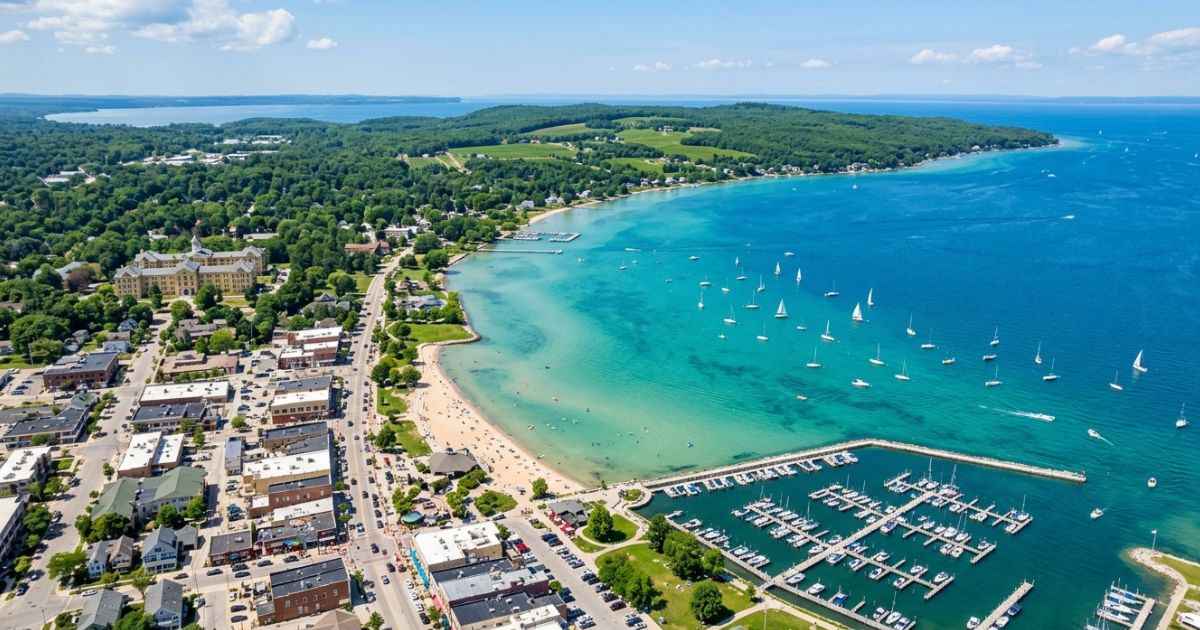
Traverse City stands out as a top Northern Michigan destination because it blends towering sand dunes, hundreds of award-winning wineries, and fresh freshwater beaches into one trip. Plan for a stay of three to five days to enjoy everything without rushing through your schedule. Major events like the National Cherry Festival in July and the Traverse City Food & Wine festival in August bring extra energy to the area. This guide covers the best local attractions, seasonal tips, and practical itineraries to help you plan your visit.
Top 10 Things to Do in Traverse City
Traverse City offers a mix of outdoor adventure, local food, and unique culture across two scenic peninsulas and the downtown waterfront.
- Climb the sand at Sleeping Bear Dunes National Lakeshore.
- Taste wine along the Old Mission Peninsula and visit the lighthouse.
- Drive the Leelanau Peninsula wine trail for lake views.
- Walk down Front Street in downtown Traverse City for shopping.
- Relax on the sand at Clinch Park Beach.
- Explore the historic shops at The Village at Grand Traverse Commons.
- Bike the paved paths of the TART Trail.
- Tour the historic Mission Point Lighthouse at the tip of the peninsula.
- Eat a scoop of homemade ice cream at Moomers.
- View art and science exhibits at the Dennos Museum Center.
Sleeping Bear Dunes National Lakeshore
Sleeping Bear Dunes National Lakeshore covers over 71,000 acres including mainland shoreline, inland lakes, and offshore islands. The Dune Climb is a steep 150-foot sand dune ascent with no constructed steps—visitors climb directly on loose sand. The Pierce Stocking Scenic Drive takes drivers along a 7.4-mile one-way scenic loop with overlooks high above the water.
How to Plan Your Visit
Sleeping Bear Dunes sits thirty to forty minutes west of downtown Traverse City by car. Arrive before ten in the morning during summer months because the main parking lot fills up quickly. Plan for at least a half-day trip, or a full day if you plan to hike multiple trails. A vehicle pass costs twenty-five dollars and stays valid for seven days.
| Attraction Feature | Details |
| Driving Time | 30-40 minutes from downtown |
| Best Arrival Time | Before 10:00 AM in summer |
| Time Needed | Half-day to full day |
| Entry Fee | $25 per vehicle pass (7 days) |
Top Trails and Beaches
The Dune Climb offers a short, steep workout with immediate rewards. The Glen Lake Trail takes hikers through quiet forests with lake views. North Bar Lake features calm, shallow water that works well for families with small children. Bring plenty of water, wear sunscreen because there is no shade, and wear shoes that are easy to empty of sand.
Wine Tasting on the Peninsulas
Traverse City sits along the forty-fifth parallel, which creates microclimates that support grape growing similar to famous European wine regions. Two distinct peninsulas stretch north into Grand Traverse Bay and Lake Michigan, each offering a different tasting experience.
Old Mission Peninsula vs. Leelanau Peninsula
| Feature | Old Mission Peninsula | Leelanau Peninsula |
| Number of Wineries | ~10 | 25+ |
| Drive Time | 15-25 minutes | 20-40 minutes |
| Scenic Highlight | Bay views on both sides | Lake Michigan and bay views |
| Best For | Quick half-day trips | Full-day exploration |
| Notable Stops | Chateau Chantal, Mari Vineyards | Shady Lane, 2 Lads |
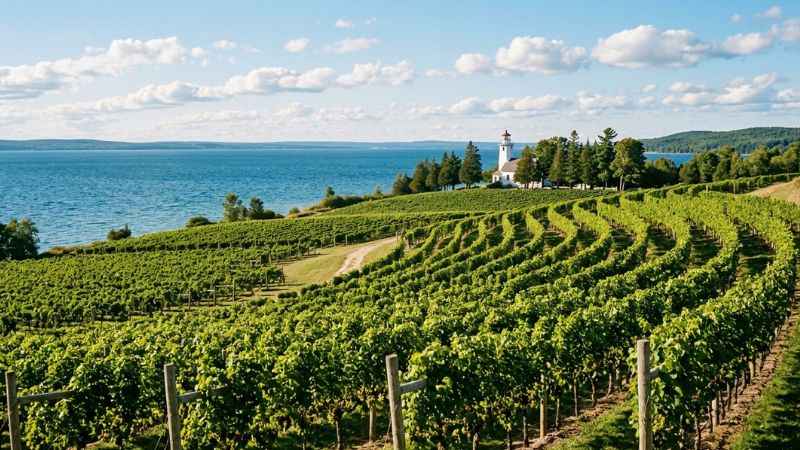
The Old Mission Peninsula splits Grand Traverse Bay down the middle with water visible from almost any vineyard road. Chateau Chantal offers hilltop estate views, while Mari Vineyards features underground caves and Italian-inspired red wines. The Leelanau Peninsula sits west of the bay and covers a much larger area that includes small towns like Suttons Bay and Leland. Many local wineries welcome dogs, but it is smart to check ahead.
Downtown Traverse City and Front Street
Front Street serves as the main retail and dining hub of downtown Traverse City. Cherry Republic sells cherry salsas, jams, and baked goods in a large, festive store. The Little Fleet operates as a year-round food truck park with an open-air bar serving local drinks. Visitors should try fresh pan-seared whitefish from Lake Michigan at local restaurants.
The Village at Grand Traverse Commons sits inside a converted nineteenth-century hospital complex. Brick pathways lead past local bakeries, clothing boutiques, and coffee shops nestled in historic architecture. Plan to spend one or two hours exploring the shops and surrounding walking trails.
Beaches and Water Activities
Clinch Park Beach sits right downtown next to a splash pad and a calm swimming area on Grand Traverse Bay. Traverse City State Park offers a wide sandy beach and picnic tables with an $11 daily entry fee. West End Beach provides a quieter spot to watch the sun go down over the water. Kayakers and paddleboarders can rent equipment directly from downtown shops.
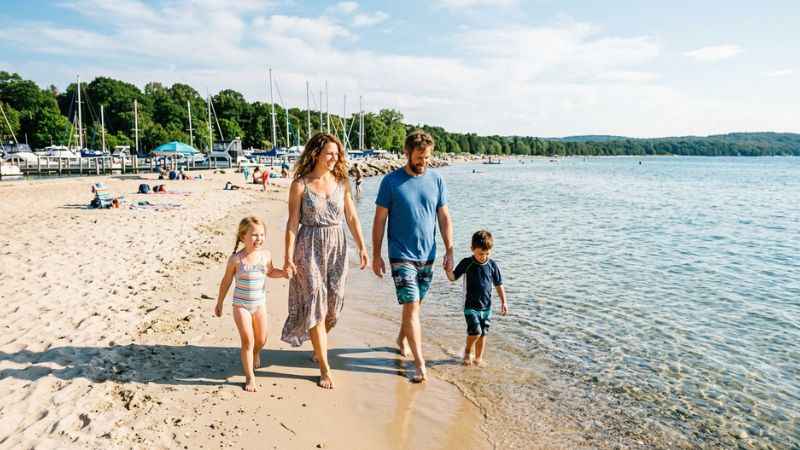
The TART Trail provides more than thirteen miles of paved path for walking and biking along the waterfront. Riders can connect to the Boardman Lake Loop for a ride around the water.
Family-Friendly Activities
Families visiting the area can enjoy hands-on exhibits at the Great Lakes Children’s Museum. Pirate’s Cove Adventure Golf offers miniature golf for school-age children near the main strip. Jacob’s Farm features seasonal fruit picking in the summer and a corn maze during autumn. For a rainy day backup, families can watch a movie at the historic State Theatre or explore indoor exhibits at the Dennos Museum Center.
Events and Festivals
| Event Name | Dates (2026) | Highlights |
| National Cherry Festival | July 4-11 | Air show, parades, fireworks |
| Traverse City Food & Wine | August 19-23 | Grand Tasting, chef dinners |
| Downtown Fine Art Fair | September 12-13 | Regional artists, Front Street |
Spring brings blooming fruit orchards and local farmers markets opening in May. Summer brings outdoor concerts and Friday Night Live events downtown. Autumn brings vibrant fall color tours and fresh apple cider mills. Winter features holiday lights, Santa’s House, and cross-country skiing at Timber Ridge Trails.
Seasonal Considerations: When to Visit
Summer brings warm weather, open beaches, and major festivals, but it also brings larger crowds and higher lodging prices. Fall offers cooler weather, bright red and orange leaves, and harvest activities with fewer tourists on the roads. Winter brings quiet snow-covered trails and cozy spaces, though some winery tasting rooms reduce their hours or close on weekdays. Spring brings blooming orchards and low travel prices, though weather can change quickly.
Sample Itineraries
1-Day Itinerary
- Morning: Climb the sand at Sleeping Bear Dunes and drive the scenic loop.
- Lunch: Eat downtown at The Little Fleet food truck park.
- Afternoon: Drive up Old Mission Peninsula to visit two wineries and the lighthouse.
- Evening: Eat dinner downtown and stop at Moomers for ice cream.
3-Day Itinerary
- Day 1: Explore Sleeping Bear Dunes in the morning, stop in Leland for lunch, and visit Leelanau wineries in the afternoon.
- Day 2: Shop on Front Street, tour The Village at Grand Traverse Commons, and visit Old Mission Peninsula wineries.
- Day 3: Swim at Clinch Park Beach, visit the Dennos Museum Center, and rent bikes for the TART Trail.
Practical Tips and Logistics
Travelers need a car to reach Sleeping Bear Dunes, the peninsulas, and most wineries. Downtown Traverse City is very walkable with plenty of public parking lots. Budget travelers can enjoy free beaches, the TART Trail, and public parks without spending money on admission tickets. Pack sunscreen and swimsuits for summer trips, and heavy coats and boots if visiting during snowy winter months.
Frequently Asked Questions
How many days do I need in Traverse City?
Plan for two to three days to see the main highlights without rushing. Four to five days work best if you want to explore both wine peninsulas, hike the dunes, and enjoy the downtown restaurants.
What is Traverse City known for?
Traverse City is famous for growing tart cherries and hosting the National Cherry Festival. It is also known for its local wine culture along the forty-fifth parallel and tall sand dunes on Lake Michigan.
Is Traverse City worth visiting?
Traverse City is worth visiting for travelers who enjoy freshwater beaches, outdoor hiking, local food, and wine tasting. It combines small-town Midwest charm with coastal scenery.
What are some hidden gems in Traverse City?
Quiet spots include the Boardman Lake Loop trail for walking, Elberta Beach across the bay, and the historic farming community at Port Oneida near the dunes.
Are there things to do in Traverse City in the winter?
Winter visitors can enjoy cross-country skiing, snowshoeing, snowmobiling, and holiday events downtown. Many restaurants and select winery tasting rooms stay open all winter long.
How far is Sleeping Bear Dunes from Traverse City?
Sleeping Bear Dunes sits about thirty to forty minutes west of downtown Traverse City by car. Plan for a half-day minimum to drive the loop and explore the visitor center.
What is the best time of year to visit Traverse City?
Summer offers the warmest weather and all open attractions, while fall brings harvest season and colorful changing leaves. Spring and winter offer quiet trips with fewer tourists around town.
Can I visit Traverse City without a car?
Downtown is easy to explore on foot, but you will need a car or a booked shuttle tour to reach the wineries and Sleeping Bear Dunes. Ride-sharing services can be limited outside the city center.
Are the wineries dog-friendly?
Many wineries allow dogs on their outdoor patios or lawns, but rules vary by location. Call ahead or check winery websites before bringing your pet along.
You May Also like:
Things to Do in Waco: The Complete Guide (2026)
Things to Do in San Diego: The Local’s Guide to America’s Finest City (2026)