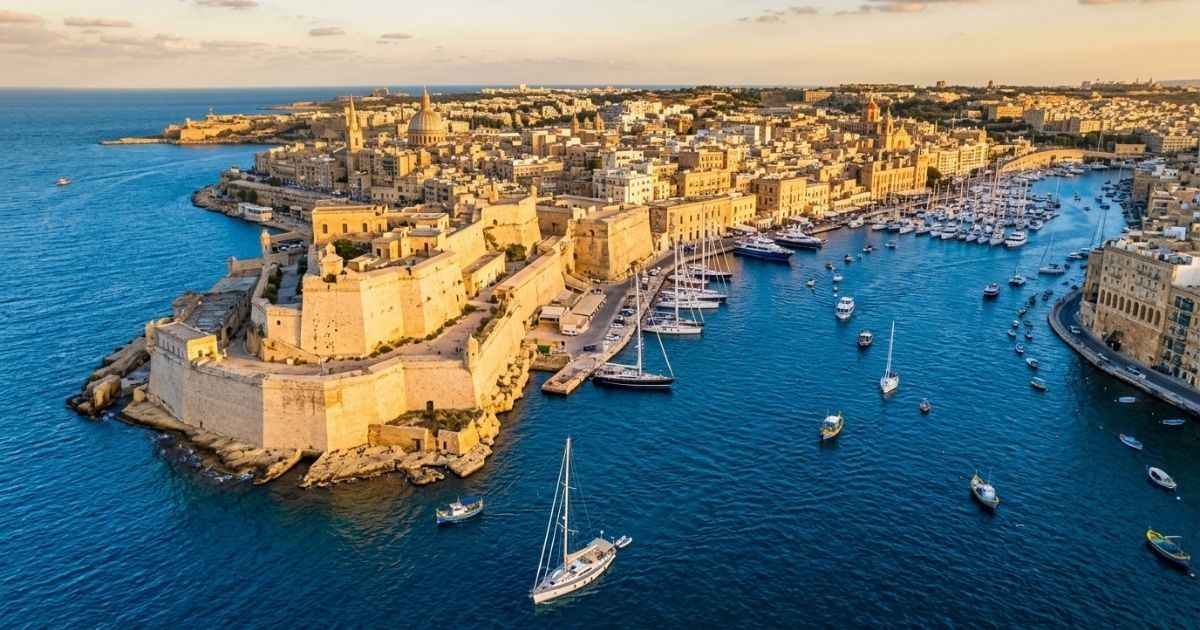
Malta packs UNESCO cities, 7,000-year-old temples, and turquoise lagoons into an archipelago slightly less than twice the size of Washington, D.C. Planning a trip here means sorting through endless options, but this guide focuses entirely on what is worth your time, what you must book in advance, and how to skip common mistakes.
Top 5 Must-Do in Malta
- Explore Valletta’s UNESCO-listed streets and St John’s Co-Cathedral
- Wander Mdina, the Silent City, at golden hour
- Swim in the Blue Lagoon at Comino by arriving early or visiting Crystal Lagoon
- Visit megalithic temples like Ħaġar Qim and Ggantija that are older than Stonehenge
- Take a day trip to Gozo to see Victoria, the Citadel, and Ramla Bay
How Many Days Do You Need in Malta?
How many days in Malta are enough depends on your travel style, but most visitors need between three and ten days to see the highlights. A three-day trip covers Valletta, Mdina, and one coastal day at the Blue Lagoon or southern coves. Five days allow you to add Gozo, the Three Cities, and a prehistoric temple visit. Seven days give you a full tour of Malta, Gozo, and Comino with time for hidden gems and rest. Ten days let you deep-dive into local villages, multiple beaches, and a village festa. Plan your sightseeing for early mornings and late afternoons to avoid the heavy midday heat.
Must-See Attractions in Malta (Prioritized by Booking Urgency)
Book Immediately: Ħal Saflieni Hypogeum
The Ħal Saflieni Hypogeum is a 5,000-year-old underground burial complex and UNESCO World Heritage site. Daily visitors are strictly limited to about eighty people to protect the fragile ancient structure, which means tickets sell out weeks or months in advance. Book your entry directly through Heritage Malta as soon as your travel dates are confirmed. Do not wait until you arrive, because third-party ticket options are extremely rare and unreliable.
Valletta (UNESCO Capital)
Valletta is a fortified harbor city built by the Knights of St John in the sixteenth century.
- St John’s Co-Cathedral houses Caravaggio’s masterpiece, The Beheading of St John the Baptist.
- Upper Barrakka Gardens offer sweeping views of the Grand Harbour and host a daily cannon firing at noon.
- Lascaris War Rooms preserve the underground tunnels used as Allied headquarters during the Second World War.
- The Grand Master’s Palace showcases state rooms and armor collections.
- Walk the limestone streets, high bastions, and the modern waterfront at your own pace.
Mdina & Rabat
Mdina is known as the Silent City because cars are banned from its medieval walled streets. Visit just before sunset when the golden light hits the stone palaces and alleyways. Just outside the gates lies Rabat, where you can explore St Paul’s Catacombs without the massive crowds found in Valletta.
Megalithic Temples (Older Than the Pyramids)
- Ħaġar Qim and Mnajdra stand on a rugged southern cliffside overlooking the sea.
- Ggantija sits on the island of Gozo and ranks among the oldest freestanding stone structures on Earth.
- Visit Mnajdra at sunrise during the spring or autumn equinox to see the sunlight align straight through the temple doors.
Blue Lagoon & Comino
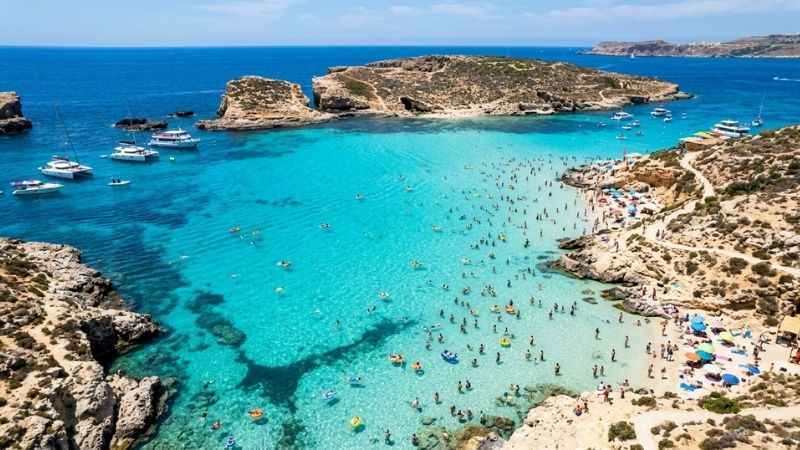
The Blue Lagoon features shallow, neon-turquoise water tucked between Comino and smaller islets. It gets extremely crowded by midday during peak season. Arrive by 9 AM to beat the tour boats, or head to Crystal Lagoon nearby for fewer crowds and better snorkeling. Santa Marija Bay on Comino offers a quieter sandy stretch if you want to escape the main beach rush. Boat tours depart regularly from Sliema, Mellieħa, and Mġarr harbor on Gozo.
Gozo (Sister Island)
Gozo offers a slower, greener escape from the main island of Malta. Victoria serves as the island hub, featuring the fortified Citadel with panoramic views over the hills. Ramla Bay provides a wide stretch of unique red sand for swimming. Wied il-Għasri is a dramatic sea inlet wedged between high cliffs where you should wear water shoes. The salt pans at Xwejni Bay stretch along the northern coast and glow bright orange at sunset. Stay overnight on Gozo if possible, because ferry schedules can limit day trips.
Blue Grotto (Żurrieq)
The Blue Grotto is a collection of sea caves on the southern coast of Malta. Take a small local boat ride through the arches to see glowing blue water reflections on the white cave walls. Morning light provides the brightest colors because the sun illuminates the underwater openings directly.
Marsaxlokk Fishing Village
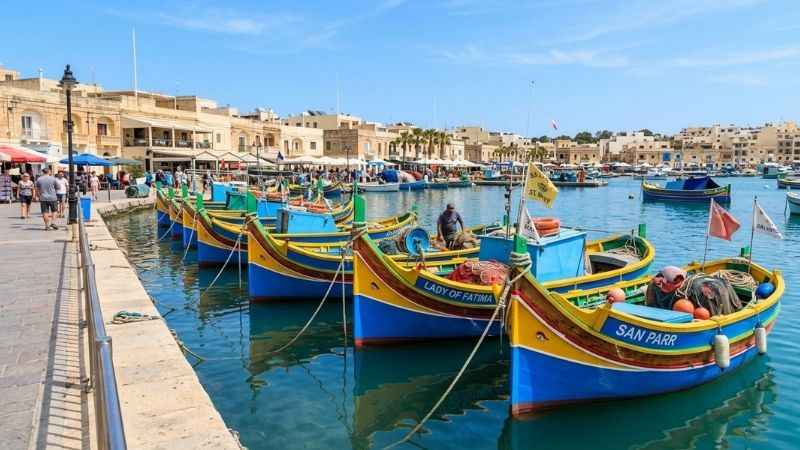
Marsaxlokk is a traditional fishing village famous for its colorful painted wooden boats called luzzus. The Sunday fish market brings locals and visitors to the waterfront to buy fresh catches. Walk the harbor promenade and stop at a local seafood restaurant for lunch.
Best Beaches & Swimming Spots in Malta
| Beach | Island | Type | Best For | Access |
|---|---|---|---|---|
| Golden Bay | Malta | Sandy | Families, sunset | Bus or car |
| Għadira Bay | Malta | Sandy | Shallow water | Bus or car |
| Ramla Bay | Gozo | Red sand | Secluded swimming | Bus or car |
| St Peter’s Pool | Malta | Rocky | Jumping, snorkeling | Walk from Marsaxlokk |
| Blue Lagoon | Comino | Sandy/rocky | Turquoise water | Boat tour |
| Crystal Lagoon | Comino | Rocky | Fewer crowds | Boat or hike |
| Għar Lapsi | Malta | Rocky cove | Calm local swimming | Hike or car |
| Wied il-Għasri | Gozo | Sea inlet | Kayaking | Boat or hike |
- Always check the colored flags at official beaches before swimming; a red flag means it is unsafe.
- Bring water shoes because many popular swimming spots have sharp limestone entries.
- Never jump off coastal cliffs without checking the water depth and underwater hazards first.
Hidden Gems & Off-the-Beaten-Path Experiences
Għar Lapsi is a sheltered rocky inlet on the southwest coast with calm waters that are popular with local swimmers. Fomm ir-Riħ is an unspoilt beach reached via a steep, rugged hiking trail down dramatic clay cliffs. Coral Lagoon is a collapsed sea cave on Comino that you can enter by boat to see an open-air swimming hole. The Three Cities, consisting of Birgu, Senglea, and Cospicua, sit right across the Grand Harbour from Valletta and offer historic waterfronts with far fewer tourists.
Village Festa Experience
Village festas are local patron saint celebrations held across Malta and Gozo. They feature street decorations, marching bands, outdoor food stalls, and massive fireworks displays. Check eventsmalta.org for current dates during the summer months. Respect religious processions when you encounter them in the streets, and grab a warm pastizzi pastry from a local bakery while you explore.
Malta Food Guide: What to Eat & Where
Must-Try Dishes
- Pastizzi are flaky diamond-shaped pastries filled with warm ricotta cheese or mushy peas, costing less than one euro at neighborhood shops.
- Rabbit stew, known locally as stuffat tal-fenek or fenkata, is the national dish slow-cooked with garlic, wine, and tomatoes.
- Ftira is a ring-shaped Maltese sourdough bread packed with tuna, capers, olives, and tomato paste.
- Timpana is a heavy baked pasta pie wrapped in pastry crust that families traditionally eat on Sundays.
- Fresh fish like lampuki or dentex should be ordered by asking the server what local catch came in that morning.
Where to Eat
- Traditional restaurants like Ta’ Marija offer local folklore dinner shows, while village social clubs serve authentic rabbit stew.
- Historic pastizzerias include Crystal Palace in Rabat and Serkin in Valletta.
- Waterfront spots in Marsaxlokk serve the freshest seafood lunch options.
- Avoid generic tourist menus that offer a standard Maltese platter, because they usually feature pre-made items.
Drinks
- Cisk is the local malt lager that pairs perfectly with a hot pastry.
- Gellewza is a native red wine produced from indigenous Maltese grapes.
- Kannella is a traditional cinnamon-flavored hot drink served during the cooler winter months.
Malta Itineraries (3, 5, 7, 10 Days)
3-Day Malta Itinerary
- Day 1: Explore Valletta, including St John’s Co-Cathedral, Upper Barrakka Gardens, and the harbor waterfront.
- Day 2: Spend the morning touring Mdina and Rabat, then catch an afternoon boat or coastal bus to the southern coves.
- Day 3: Visit the Marsaxlokk Sunday market and jump into St Peter’s Pool, or tour the historic Three Cities.
5-Day Malta Itinerary
- Days 1-2: Walk through Valletta and take a traditional wooden boat across the harbor to the Three Cities.
- Day 3: Tour Mdina, explore Rabat, and visit the Hypogeum if you secured advance tickets.
- Day 4: Catch an early morning boat to Comino to experience the Blue Lagoon before the midday rush.
- Day 5: Take the ferry to Gozo to tour Victoria, the Citadel, and relax on Ramla Bay beach.
7-Day Malta Itinerary
- Days 1-3: Cover Valletta, the Three Cities, Mdina, and the southern megalithic temples.
- Day 4: Spend a full day exploring the Blue Lagoon, Crystal Lagoon, and hidden Comino coves.
- Days 5-6: Stay overnight on Gozo to see the Xwejni salt pans, Wied il-Għasri, and the local valley trails.
- Day 7: Return to mainland Malta to visit Marsaxlokk, the Blue Grotto, and the high cliffs at Dingli.
10-Day Malta Itinerary
- Add a village festa evening, multiple sandy and rocky beach days, and hidden coves like Għar Lapsi and Fomm ir-Riħ. Fill extra time with a local cooking class or a wine-tasting session in the countryside.
Getting Ground Transport Options Compared
| Option | Cost | Pros | Cons | Best For |
|---|---|---|---|---|
| Tallinja Bus | €2.00–€2.50 per journey, or €25–€27 for 7-day Explore cards | Cheap, covers island | Slow, crowded | Budget travelers |
| Harbor Ferry | €2.80 | Scenic, fast | Limited routes | Valletta base |
| Gozo Ferry | €4.65 return | Only way to Gozo | Weather-dependent | Gozo day trips |
| Bolt / Uber | €5–€15 per ride | Door-to-door | Surge pricing | Late nights |
| Rental Car | €25–€50 per day | Total flexibility | Narrow roads | 7+ day trips |
- Download the official Tallinja app for real-time bus tracking and route updates.
- Pre-purchase the Tallinja Explore Card for unlimited travel across standard bus routes.
- Avoid renting a car if you plan to stay only in Valletta, because parking is nearly impossible.
- Use ride-hailing apps like Bolt for airport transfers because they often cost less than standard street taxis.
First-Timer Mistakes in Malta (and How to Avoid Them)
- Trying to squeeze Valletta, Mdina, and the Blue Lagoon into a single day causes burnout because travel times add up quickly.
- Forgetting to book the Hypogeum weeks ahead means you will miss out entirely on the underground attraction.
- Visiting the Blue Lagoon at midday exposes you to massive crowds and harsh sun with little shade.
- Underestimating the Mediterranean sun will cause severe sunburns within twenty minutes on exposed limestone bastions.
- Renting a car without checking road conditions leads to scraped rental doors on narrow stone walls and confusing parking fines.
- Staying in Paceville when you want a quiet family holiday is a mistake, because that area is the island’s main nightlife hub.
- Skipping water shoes makes walking on sharp rocky shelves at spots like St Peter’s Pool painful.
- Ignoring local festa road closures can strand your bus or car behind blocked village streets during evening celebrations.
- Leaving bags unattended in crowded bus terminals invites petty theft.
What’s On in Malta 2026: Festivals & Events
- Village Festas: Weekly celebrations run from June through September; check eventsmalta.org for town schedules.
- Gozo Film Festival: August 21–23, 2026, hosted at the Victoria Citadel.
- Pinta Festival: August 21–23, 2026, held at St George’s Square in Valletta.
- BBC Radio 1 Dance Malta: August 22, 2026, at UNO Malta (Crafts Village, Ta’ Qali, Attard) featuring Bebe Rexha (replacing John Summit), Jonas Blue, Charlie Hedges, and Jeremiah Asiamah.
- Notte Bianca: An all-night arts and culture festival across Valletta.
- Malta Jazz Festival: Takes place along the Valletta waterfront.
FAQ: Things to Do in Malta
What should I not miss in Malta?
Do not miss Valletta, the Silent City of Mdina, the Blue Lagoon on Comino, the ancient megalithic temples, and the island of Gozo.
How many days in Malta are enough?
Three days are enough to see the major highlights, but five to seven days give you enough time to explore Malta, Gozo, and Comino without rushing.
What is the best time to visit Malta?
The best time to visit is from April to June and September to October, when the weather is warm and mild, and tourist crowds are smaller.
Is Malta worth visiting?
Yes, Malta is worth visiting for its unique 7,000-year history, UNESCO-listed architecture, crystal-clear turquoise waters, and compact, walkable island layout.
What should I be careful of in Malta?
Be careful of intense sun exposure during summer, petty theft in crowded tourist areas, driving on narrow left-hand roads, and overcrowding at the Blue Lagoon.
What is the most famous food in Malta?
The most famous foods in Malta are pastizzi, which are flaky pastries filled with ricotta or peas, and traditional rabbit stew known as fenkata.
Where should I stay in Malta?
Stay in Valletta if you love history, Sliema for central convenience and shopping, Mellieħa for sandy beaches, or Gozo for a quiet countryside stay.
Do I need a car in Malta?
You do not need a car if you stay in Valletta and use buses or ferries, but a rental car helps if you want to visit hidden coves and take a 7-day trip.
Next Action: Check your travel dates now and book your Ħal Saflieni Hypogeum tickets immediately through Heritage Malta, as daily capacity fills up months in advance.
You May Also Like:
Fun Things to Do in Paris: The 2026 Guide to Iconic Sights, Hidden Gems, and Local Experiences
Things to Do in Sorrento: The Ultimate 2026 Guide to Italy’s Coastal Gem