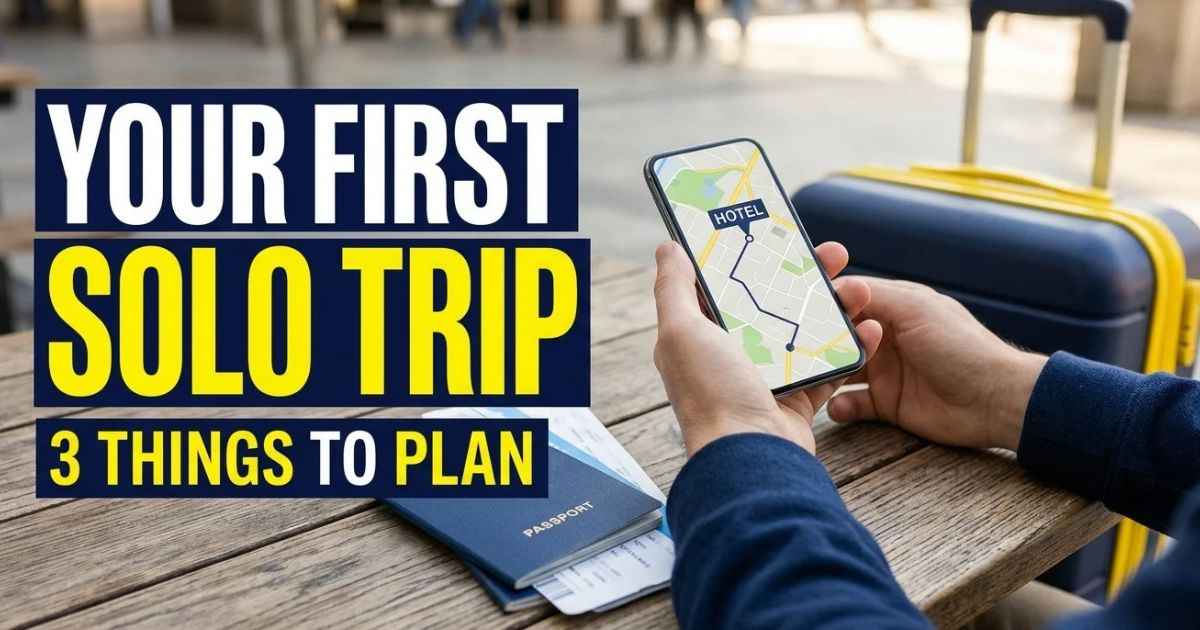
Solo travel for beginners works best in small steps. Pick a trip you can handle, book your first night, and make a safety plan. Then leave the rest of the days loose.
Traveling alone has real perks. You set your own schedule and pick your own activities. It also has real downsides, like quiet evenings, awkward meals, and every decision landing on you. People who have done it say both are true.
Why do people go alone? Hostelworld’s 2026 State of Solo Travel report covers 3,309 surveyed travelers. In it, 50.5% said they did not want to wait on anyone else’s schedule. Another 18.1% said nobody they know could take the time off or afford the trip. These numbers come from Hostelworld’s own sample, not from all travelers.
This guide shows you where to start, what to book, and how to handle the hard moments.
Solo Travel for Beginners: How Should You Start?
Start small. Several beginner guides and traveler discussions say the same thing. Build your comfort a little at a time, then go farther.
Try a local activity or day trip
Practice doing things alone close to home. Visit a museum. Take a day trip. Eat a meal alone at a restaurant. These small tests show you what feels fine and what feels hard.
Pick a short first trip
One traveler in a Reddit discussion suggested a three-to-five-day trip in your home country. Try day tours and a solo dinner while you are there. After that, you can think about a short trip abroad. This is one person’s idea, not a rule. The right length is different for everyone.
Decide how much to plan
You do not need to plan every hour. You do need to know a few key things. Know where you will sleep on the first night and how you will get there. Leave the rest open.
Be kind to yourself
Another Reddit discussion gives this advice: be kind to yourself and give it time. You do not have to love every minute. Solo travel is also not for everyone. If it does not suit you, that is a fair answer.
How to Choose Your First Solo Travel Destination
A famous place is not always the best first pick. Look at the practical side. Ask how easy the place is for one person to handle.

Use this table to compare your options.
| What to check | Questions to ask |
|---|---|
| Travel time from home | How long will you be on the move before you can rest? |
| Public transportation and walkability | Can you get around without a car? |
| Language comfort | Can you read signs and talk to people with ease? |
| Where you stay | Is the neighborhood a good fit for one person? |
| Activities | Does the place offer things you would enjoy anyway? |
| Health care access | Can you reach medical help if you need it? |
| Official travel advice | What does the current government advisory say? |
| Total cost | Does the full trip fit your budget? |
Look past the reputation
The exact neighborhood matters. So do your hotel location and your transport plan. Check these before you book, not after.
Check official advice first
U.S. travelers can read the U.S. Department of State Travel Advisories. The list shows a risk level and an issue date for each place. Advisories have four levels. Level 1 means exercise normal precautions. Level 2 means exercise increased caution. Level 3 means reconsider travel. Level 4 means do not travel.
Advisories change over time. Read the one for your destination before you book. Then read it again before you leave.
This guide does not name any country as the safe pick for beginners. A label like that can go out of date fast. The current advisory is a better guide.
How Much Does a Solo Trip Cost?
Set your budget early. It helps you pick a place and a trip length. Use this simple table to list each cost.
| Cost | What to include |
|---|---|
| Lodging | Nightly rates and any extra fees |
| Transport | Getting there, getting around, and getting to your room |
| Meals | Your daily food costs |
| Activities | Tours, tickets, and classes |
| Phone and data | How your phone will work in the place you visit |
| Insurance | A policy, if you choose to buy one |
| Extra cushion | Money set aside for surprises |
Know the single supplement
Some rooms, tours, and cruises set their prices for two people sharing. When you book alone, you may pay an extra charge. This charge is called a single supplement. It differs from one provider to the next, so compare the full price, not just the first number you see.
Keep a backup way to pay
Do not rely on one payment method. Bring a second card. Store the cards in different places. If one is lost or does not work, you still have another.
What Should You Book Before Traveling Alone?
You do not have to book everything. A few key items make your first day much easier.
Lock in your first night
Confirm the address, your booking details, and the check-in plan. Know when you will arrive. Then check that the place can take you at that time.
Plan how you will get to your room
Save the route and the address where you can read them without internet. The best option depends on the place and the hour. Several guides also suggest arriving in daylight when you can.
Keep the first day light
Do not fill your first day with plans. You need time to find your room, eat, rest, and get used to the place. A calm first day sets up the rest of the trip.
How to Stay Safe While Traveling Alone
Safety is a set of small actions. None of them is hard. Do them before you leave and keep doing them on the road. No plan can promise zero problems, but good habits help.
Share your plans with someone you trust
The CDC advises leaving your itinerary, contact details, and copies of key papers with someone at home. Agree on how often you will check in. Make sure that person knows what to do if they cannot reach you.
Protect your papers and your privacy
Keep copies of your important documents. Keep key contact numbers where you can reach them. Do not share where you are staying with people you do not trust. One travel writer also advises trusting your gut and changing plans if something feels wrong.
Check passports, visas, and entry rules
Rules depend on where you go and who you are. The U.S. State Department says some countries, especially in Europe, need a passport valid for at least six months past your trip dates. Not every country has that rule. Check the rule for your own destination on the State Department’s international travel checklist.
Get ready for emergencies
The State Department offers the Smart Traveler Enrollment Program, called STEP. STEP is a free service for U.S. citizens and nationals traveling abroad. STEP sends email alerts from the U.S. embassy or consulate for your destination. It also helps that office contact you or your emergency contact during an emergency. STEP does not replace your own planning.
Some trips need extra care. If you plan to be far from phone service, think about a backup way to call for help. One outdoor traveler uses a satellite messenger and a phone location-sharing feature for this.
Think about your own needs
Every traveler faces different risks. Think about privacy, your room location, and late arrivals. Know that you can always leave a place or a situation that feels wrong.
Plan for health
The CDC says to pack the medicines you need, plus extra in case of delays. The U.S. State Department says some prescription and over-the-counter medicines legal in the United States are illegal in other countries. Check the rules for your destination before traveling. CDC Travelers’ Health has destination-based advice.
Solo Travel Accommodation: Hostels, Hotels, or Rentals?
Where you sleep changes how much you talk to other people. It also changes how much quiet you get. Neither choice is wrong.
| Option | Privacy | Shared spaces | What travelers said |
|---|---|---|---|
| Hostel common areas | Lower in shared spaces | Common areas where you can meet other guests | Easy places to start a chat |
| Private rental or hotel | Higher | May have fewer shared spaces | One traveler in Vietnam felt lonely after leaving hostels |
| A mix of both | Depends on the night | Depends on the night | One commenter said they mix hostels and hotels to get better sleep. They also said they were comfortable traveling alone |
Match your stay to your needs
Do you want company? Try a hostel with a common room. Do you want sleep and quiet? A private room may fit better. Some people use both on one trip.
Meet people from a private room
You do not need a hostel to meet others. Walking tours, classes, and day trips can all help. One Reddit poster suggested classes based on your own interests.
How to Meet People When Traveling Solo
Meeting people is a choice, not a duty. Some travelers want company. Others want quiet. Both are fine.
Here are some ways to meet people:
- Join a guided day trip.
- Take a walking tour.
- Sign up for a class linked to something you enjoy.
- Spend time in the common areas of your lodging, if it has them.
A group tour still counts as solo travel. It gives you structure and a chance to meet others. You do not have to plan every part of the trip yourself.
How to Handle Loneliness and Eating Alone
Hard moments happen. Knowing this ahead of time helps. A few real stories show what these moments look like.
Make eating alone easier
One Reddit poster worried about being judged for eating alone. Other travelers shared ideas that worked for them:
- Sit at a counter.
- Pick a shared table.
- Bring a book or a tablet.
- Use headphones.
- Call a friend during your meal.
One commenter said that doing things alone gets easier each time you try. Try one idea. If it does not work, try another.
Plan for quiet evenings
Some evenings feel long. If you want company, plan ahead. Book a group activity or a tour for that night. If you want quiet, enjoy it. A calm night does not mean your trip is a failure.
Make long waits easier
One traveler described a first solo trip to Japan. At Fuji-Q Highland, the lines lasted one to two hours. The traveler felt alone even with crowds all around. The problem was not a lack of people. It was a lack of someone to talk to while waiting.
Get ready for waits like this. Bring something to do, like a book, a show, or a call with a friend. These ideas will not remove every lonely moment. They can make the wait feel shorter.
A lonely day does not mean you made a mistake. It is a normal part of traveling alone for the first time.
What to Pack for Solo Travel
Pack for the parts you will handle alone. You carry your own bag. Pack only what you can manage.
Documents and contacts
Bring your travel documents, booking details, and key contacts. Keep copies in a separate place. Leave a copy with someone at home.
Phone and connectivity
Check how your phone will work in your destination. Download maps and key details so you can read them offline. A local SIM or a travel eSIM are two ways to get data. Compare the terms before you choose.
Clothing, luggage, and health supplies
Pack light enough to carry your bag alone. Bring the medicines you need, based on your destination. The CDC says your travel health kit should match your trip.
Solo Travel for Beginners: Pros and Cons
Is solo travel right for you? Here is a fair look at both sides.
What many solo travelers like
- You set your own schedule.
- You pick activities you enjoy.
- You can change plans without asking anyone.
What can be hard
- You make every choice yourself.
- You handle bags and problems alone.
- You may pay a single supplement.
- You may have lonely moments, awkward meals, or quiet evenings.
Solo travel will not suit everyone. It will not feel easy all the time. Real travelers say their experiences vary a lot. Try a short trip and see how it feels.
A Simple First Solo Trip Plan
Here is a sample plan. It is an example, not a rule. Change it to fit your trip.
Before you leave
- Pick a place and set a budget.
- Check the official rules if you are going abroad.
- Confirm your first night’s room.
- Share your plans with someone you trust.
Arrival day
- Get to your room and save the key details.
- Find a place to eat.
- Keep the day light.
First full day
- Pick one main activity.
- Leave time to rest or join a social activity.
Final day
- Think about what worked and what felt hard.
- Decide what you would change next time.
Current Checks Before You Go
Some facts change often. Check these items before you book and again before you leave.
| What to check | Where to check | Why |
|---|---|---|
| Travel advisories | U.S. State Department Travel Advisories | Risk levels and issue dates change |
| Passport and visa rules | State Department international travel checklist | Rules differ by country |
| Health advice and medicine rules | CDC Travelers’ Health and the State Department international travel checklist | Needs depend on the destination, and some medicines legal in the United States are illegal in other countries |
| Insurance costs | Insurance providers | Squaremouth reports an average solo policy cost of about $250 (U.S. dollars), based on its own past 12 months of data. Squaremouth says most comprehensive travel insurance policies cost between 4% and 10% of the total trip cost. Squaremouth sells insurance, so treat these as its own estimates |
| Lodging and transport prices | Providers you plan to use | Rates change with date and demand |
| Phone data plans | Your phone company or an eSIM provider | Terms and prices change |
Solo Travel for Beginners FAQ
How do I start solo travel if I feel nervous?
Start with small steps. Try a local activity or a day trip alone. Then take a short trip in your home country. Build from there.
Should I plan everything before my first solo trip?
No. Plan the essentials, like your first night’s room and how you will get there. Leave the rest open. This keeps your trip calm and flexible.
How long should my first solo trip be?
There is no set length. One Reddit commenter suggested three to five days in your home country. Pick a length that feels right for you.
How can I meet people without staying in a hostel?
Try a walking tour, a class, or a guided day trip. These can work from any kind of room. One traveler who left hostels said classes based on personal interests helped.
What should I do if I feel lonely?
Plan something social for the quiet times. You can book a tour, join a class, or call a friend. Loneliness may not vanish fast, and that is normal. It does not mean you made a mistake.
Is it awkward to eat alone?
It can feel that way at first. Travelers suggest a counter seat, a shared table, or a book. Some call a friend during the meal. It often gets easier with practice.
What documents should I check before traveling internationally?
Start with the U.S. State Department’s international travel checklist. Check your passport date and any visa or entry rules. Rules differ by destination, so check the one for your trip.
Do I need travel insurance for a solo trip?
That depends on your trip and your needs. The State Department lists insurance as one thing to consider. It also says the U.S. government does not pay travelers’ medical bills abroad. U.S. health insurance, including Medicare and Medicaid, usually does not cover medical care outside the country. Compare policies before you decide, and do not rely on a single price quote.
You May Also Like:
First-Time International Travel Checklist
How to Pack Light for a 2-Week Trip