Your first trip abroad has a lot of moving parts. This first-time international travel checklist puts them in order: documents, health, money, phone, packing, and the airport. Start with your passport and your destination’s entry rules. Those two checks come first because they can stop a trip before it starts.
One warning before you begin. Many rules depend on where you are going. Use this guide for the big picture, then check official pages for your own destination.
First-Time International Travel Checklist at a Glance
Use this short list as your map. Each item has its own section below.
| Area | What to do | Section |
|---|---|---|
| Documents | Check your passport, visa or travel approval, and entry rules | Documents |
| Timeline | Plan what to do early, in the last month, and in the last week | Timeline |
| Health | Check vaccines, medicine rules, and insurance | Health |
| Money | Pick a main card, a backup card, and some local cash | Money |
| Phone | Choose roaming, a local SIM, or an eSIM, and download offline maps | Phone |
| Packing | Put key items in your carry-on, then pack light | Packing |
| Airport | Learn the steps from check-in to boarding | Airport |
| Arrival | Know how you will reach your stay, and keep day one easy | Arrival |
| Safety | Sign up for embassy alerts and plan for your home | Safety |
Current Checks: Verify These Before You Go
Some facts change often. Check each one again before you book and before you leave. Research for this guide was done on October 29, 2026.
| Item | Why it changes | Where to check |
|---|---|---|
| Passport validity for your destination | Some countries require extra validity beyond your travel dates | U.S. Department of State destination page |
| Visa or travel approval | Rules differ by country and by the nationality on your passport | Destination page, UK ETA guide, EU ETIAS page |
| Passport processing times | Routine service is listed at four to six weeks. Expedited is listed at two to three weeks. Mailing time is extra. | U.S. passport processing page |
| Health advice and medicine rules | They depend on your destination and your medicines | CDC Travelers’ Health pages |
| Airline baggage and airport rules | They differ by airline, airport, and route | Your airline and airport |
| Card fees and phone plan costs | They depend on your bank and carrier | Your bank and your carrier |
First-Time International Travel Documents: Passport, Visa, and Entry Rules
Documents are the most important part of your trip. The U.S. Department of State has a five-step checklist for travelers. It covers destination research, STEP, documents, personal safety needs, and insurance.
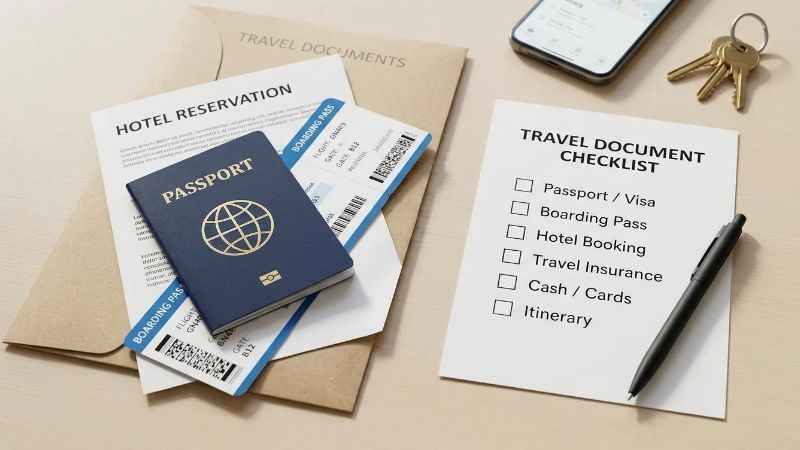
Its destination lookup is the best place to start if you are a U.S. traveler. It shows travel advisories, visa needs, passport validity, local laws, health information, and embassy contacts.
Check Your Passport Validity
Passport validity rules differ by destination. For example, Thailand requires a passport valid for at least six months beyond arrival. Airlines may also deny boarding if your documents do not meet the travel requirements. Check your destination’s official guidance and your airline’s rules.
Look up your own destination. Then check your passport dates against that rule.
If you need a new passport, plan early. The official page lists routine service at four to six weeks and expedited service at two to three weeks. Mailing time is separate. Check the current times before you book anything you cannot get back.
Check Visas and Electronic Travel Authorizations
Some countries want a visa. Some want an electronic travel authorization, which is an online approval you get before you fly. Rules differ by destination and by the nationality on your passport.
Here is how to check:
- Open the Department of State destination page for your country.
- Read the visa and entry section.
- If you are going to the UK, use the official UK guide to see if you can apply for an ETA.
- If you are going to Europe, read the official EU page about ETIAS. It said operations are planned for the last quarter of 2026. It also said travelers did not need to act at that point. Check the live page, because this can change.
Save Copies of Important Documents
Real travelers share a simple habit. Keep a paper copy and a phone photo of your passport. Share a copy with someone at home too.
- Keep a paper copy of your passport, apart from the passport itself.
- Keep a photo of it on your phone.
- Send a copy to a person you trust at home.
- Keep money and cards in separate places, so one loss does not stop your trip.
Before Your International Trip: Planning Timeline
A timeline keeps you calm. Here is one way to split the work. It uses the planning stages in GoAbroad’s checklist and the health timing from the CDC.
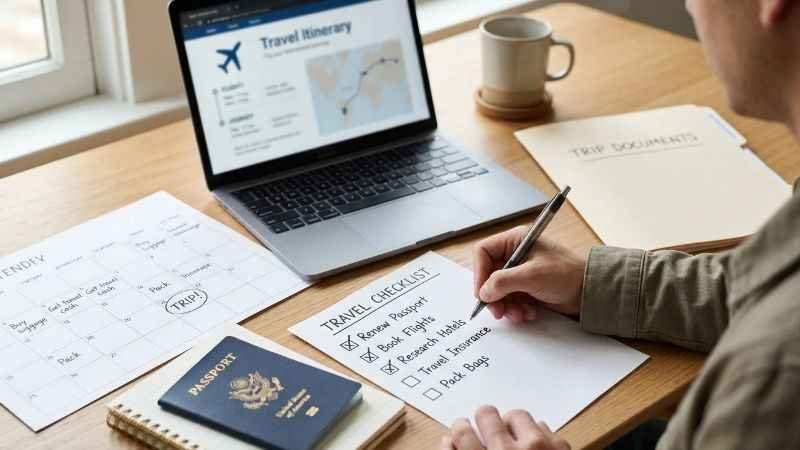
Early planning (several months out)
- Check your passport dates.
- Look up visa and entry rules.
- If you need a passport, check the current processing times first.
Four to six weeks out
- Book a travel health visit. The CDC suggests this window.
- Ask your doctor about vaccines and your medicines.
- Review your insurance options.
The last month
- Check your card and bank terms.
- Pick your phone plan.
- Make copies of your documents.
The last week
- Check your airline’s baggage and check-in rules.
- Download offline maps and any apps you need.
- Set up care for your home.
- Pack your carry-on first.
Departure day
- Keep your passport, phone, cards, and medicines in your carry-on.
- Leave for the airport early.
International Travel Health, Medication, and Insurance
Health planning is easy to skip. Do not skip it. Rules and risks change by country.
Check Vaccines and Destination Health Advice
The CDC says to check health information for your destination. It also says to keep routine vaccines current. Book a travel health visit at least four to six weeks before you leave.
The CDC also recommends carrying a copy of your official immunization records when you travel.
Prepare Prescription Medicines
Countries have different rules for medicines. A medicine that is legal in the United States may be restricted somewhere else. This can apply to prescription and over-the-counter products.
The CDC says to check the rules for your destination and any country where you change planes. Then take these steps:
- Keep medicines in their original, labeled containers.
- Carry copies of your prescriptions, including the generic names of your medicines.
- Pack medicines in your carry-on bag.
- Bring enough medicine for the whole trip, plus extra in case of travel delays.
Review Travel Health and Evacuation Coverage
The U.S. government does not pay a U.S. citizen’s medical costs abroad. The Department of State also says Medicare and Medicaid generally do not cover medical care abroad. It says to consider travel health insurance. It strongly recommends medical evacuation insurance for higher-risk areas or places with limited medical care.
Think of these as two kinds of coverage:
| Coverage | What it is for |
|---|---|
| Travel health insurance | Medical care costs while you are abroad |
| Medical evacuation insurance | Moving you to better care if you are hurt or sick |
Check your current policy before you buy a new one. Ask what it covers outside your home country.
Money and Credit Cards for International Travel
First-time travelers ask the same question again and again. Should I bring cash or use cards? The honest answer is that it depends on your bank and your trip.
One traveler in a discussion said exchanging money before leaving felt like “getting ripped off.” That is one person’s view. It is not a rule for every exchange counter. Compare your options instead.
Here is a simple plan:
- Bring a main card and a backup card. Keep them in different places.
- Ask your bank about foreign transaction fees. These are extra charges for using a card abroad.
- Ask about ATM fees. Some banks and machines charge them.
- Compare exchange rates. Rates differ between exchange counters, ATMs, and cards.
- Carry some local cash. Pick an amount that fits your trip.
- Know who to call if a card goes missing. Save your bank’s number.
Fees and card terms depend on your own account. Read them before you leave.
Phone Plans, eSIMs, and Offline Maps for International Travel
You will likely need your phone for maps, messages, and rides. Plan this before you fly. Prices, device support, and data amounts depend on your carrier and plan.
| Option | What to ask first |
|---|---|
| International roaming (using your home plan abroad) | What does it cost, and how much data do I get? |
| Local SIM (a new card from a local company) | Is my phone unlocked, and where can I buy one? |
| eSIM (a digital SIM you add without a card) | Does my phone support it? What does the plan cost? |
Whatever you pick, set up a few things at home first:
- Download offline maps for your destination.
- Download a translation app if you need one.
- Save your hotel address and your embassy contact where you can read them without data.
International Travel Packing Checklist: Carry-On and Checked Bags
Packing guides can get very long. You do not need every item. Start with what you cannot replace, then add the rest.
One tip from real travelers is to pack fewer clothes. Pack what you expect to use, and keep important items easy to find.
Carry-On Essentials
Keep these with you, in case your checked bag is late:
- Passport and other travel documents
- Medicines in original, labeled containers, with prescription copies
- A backup payment card
- Phone and charger
- A pen for forms
- A change of clothes and key toiletries
A couple on their first international trip said they packed sunscreen, a pen, and a personal item. They still asked what else travelers wished they had brought. Use your destination and trip length to decide.
Clothes, Toiletries, and Walking Shoes
Pack for the weather where you are going. Pick clothes that mix and match. Bring comfortable walking shoes, since you will likely walk more than at home.
Group your items so they are easy to find:
- Clothing
- Toiletries
- Medicines
- Electronics
- Optional comfort items
Add optional items last. Products like packing cubes or luggage trackers help some people. Your trip does not depend on them.
Electronics, Plug Adapters, and Liquids
Electrical plugs differ by destination. Check which plug type your destination uses, and bring the right adapter.
For ordinary liquids, TSA limits each carry-on container to 3.4 ounces or 100 milliliters. These liquids must fit in one clear quart-size bag per traveler. Medically necessary liquids, baby formula, and breast milk have separate rules. Check TSA guidance before your flight.
Check current airport security rules before you fly. Your airline also sets its own baggage allowances.
Airport and Immigration Guide for First-Time International Travelers
Airports feel big if you have never used one. The steps are simple. The exact order changes by airport and route.
Check-In, Security, and Boarding
- Arrive early. One guide says at least two hours for international flights. Another says about three. Follow your airline’s advice.
- Check in. Show your passport. Drop your checked bag if you have one.
- Go through security. Have your liquids bag ready.
- Pass through passport control where it applies. Keep your passport in hand.
- Find your gate. Check the screens, since gates can change.
- Board. Keep your passport and boarding pass handy.
If you have a connecting flight, check the rules for each stop. Travelers on a first solo trip with connections raised this worry.
Immigration and Customs
When you land, you will follow signs to immigration. An officer checks your documents. Rules and questions depend on the destination and on your own situation.
Be ready with these:
- Your passport and any visa or approval
- The address of where you are staying
- A pen, in case you must fill out a form
Customs rules also differ by country. Read the official guidance for your destination, including what you can bring in.
International Arrival Plan: Transport, Accommodation, and Jet Lag
Many travelers talk about the first day, not only the flight. One traveler suggests making your first day a “chill day” with no hectic schedule.
Before you leave, plan these:
- How you will get from the airport to your stay
- Your accommodation name and address, saved offline
- A light first day, since time differences can leave you tired
Do not pack your first day with tours. Eat, rest, and walk nearby.
Travel Safety, STEP Alerts, and Home Preparation
STEP stands for the Smart Traveler Enrollment Program. It is free for U.S. citizens. It sends email updates and alerts from U.S. embassies and consulates. In an emergency, it can help them reach you or your emergency contacts.
Also check the safety tips on the Department of State destination page. Then handle your home:
- Share your trip plan with someone you trust.
- Arrange care for your home while you are away.
- Save embassy contacts in your phone.
FAQs About Your First International Trip
What should I know before traveling internationally for the first time?
Check your passport and entry rules first. Then plan health, insurance, money, phone service, and packing. Use the official destination page for your country as your starting point.
What documents do I need to travel abroad?
At a minimum, you need a valid passport. Some destinations also need a visa or travel approval. Check the Department of State destination page for your country.
Do I need six months of passport validity?
Not for every country. Passport validity rules differ by destination. For example, Thailand requires a passport valid for at least six months beyond arrival. Check your destination’s official guidance and your airline’s rules.
How early should I arrive for an international flight?
Guides differ. One says at least two hours. Another says about three. Check your airline’s advice for your airport and route.
What happens at immigration?
An officer checks your documents when you enter a country. Rules depend on the destination and your situation. Keep your passport, any visa, and your stay address ready.
Should I bring cash or use cards?
It depends on your bank and your trip. Compare card fees, ATM fees, and exchange rates. Many travelers bring a main card, a backup card, and some local cash.
Should I use an eSIM, a local SIM, or roaming?
Compare cost, phone support, and data amounts. Prices depend on your carrier and plan. Download offline maps either way.
Should I buy travel insurance for my first trip?
The U.S. government does not pay a U.S. citizen’s medical costs abroad. The Department of State says to consider travel health insurance. Check what your current policy covers first.
You May Also Like:
How to Pack Light for a 2-Week Trip
Best Things to Do in Boston: A Practical Guide for Every Visitor